
Poultry red mite infestations in chicken coops during the summer season are a nightmare for every poultry keeper. As temperatures rise, this chicken parasite multiplies extremely quickly. It attacks birds at night and hides during the day in cracks, wood and other sheltered places inside the chicken coop. If you have noticed a drop in egg production, feather loss and increased nervousness in your flock, it is time to act!
Simply cleaning the chicken coop is not enough. You need a specific and consistent action plan to eliminate this harmful parasite – the poultry red mite.
Post Contents [hide]
- Why Do Poultry Red Mites Attack More Intensively in Warm Weather?
- Poultry Red Mite – First Signs in the Flock and How to Prevent an Infestation
- Common Mistakes When Fighting Poultry Red Mites – What Should You Avoid?
- What Do Poultry Red Mites Dislike?
- FAQ – Frequently Asked Questions About Poultry Red Mites
Why Do Poultry Red Mites Attack More Intensively in Warm Weather?
Poultry red mites become particularly active during warm weather because high temperatures and humidity significantly accelerate their life cycle. At temperatures above 20°C, development from egg to adult mite can take as little as 7 days. As a result, the population of this chicken coop parasite can increase rapidly during summer.
By comparison, from autumn through early spring the problem is usually much less noticeable. Low temperatures reduce the activity of poultry red mites and slow down their reproduction. During colder months, the mites can survive hidden for long periods without feeding, waiting for warmer conditions to return.
This is why summer infestations are particularly difficult to control and require a rapid response. Warm and hot months are the period of peak activity for these troublesome mites in the chicken coop. At this time, they need more food for reproduction, which is why poultry red mites in the chicken coop may feed much more intensively.
Poultry Red Mite – First Signs in the Flock and How to Prevent an Infestation
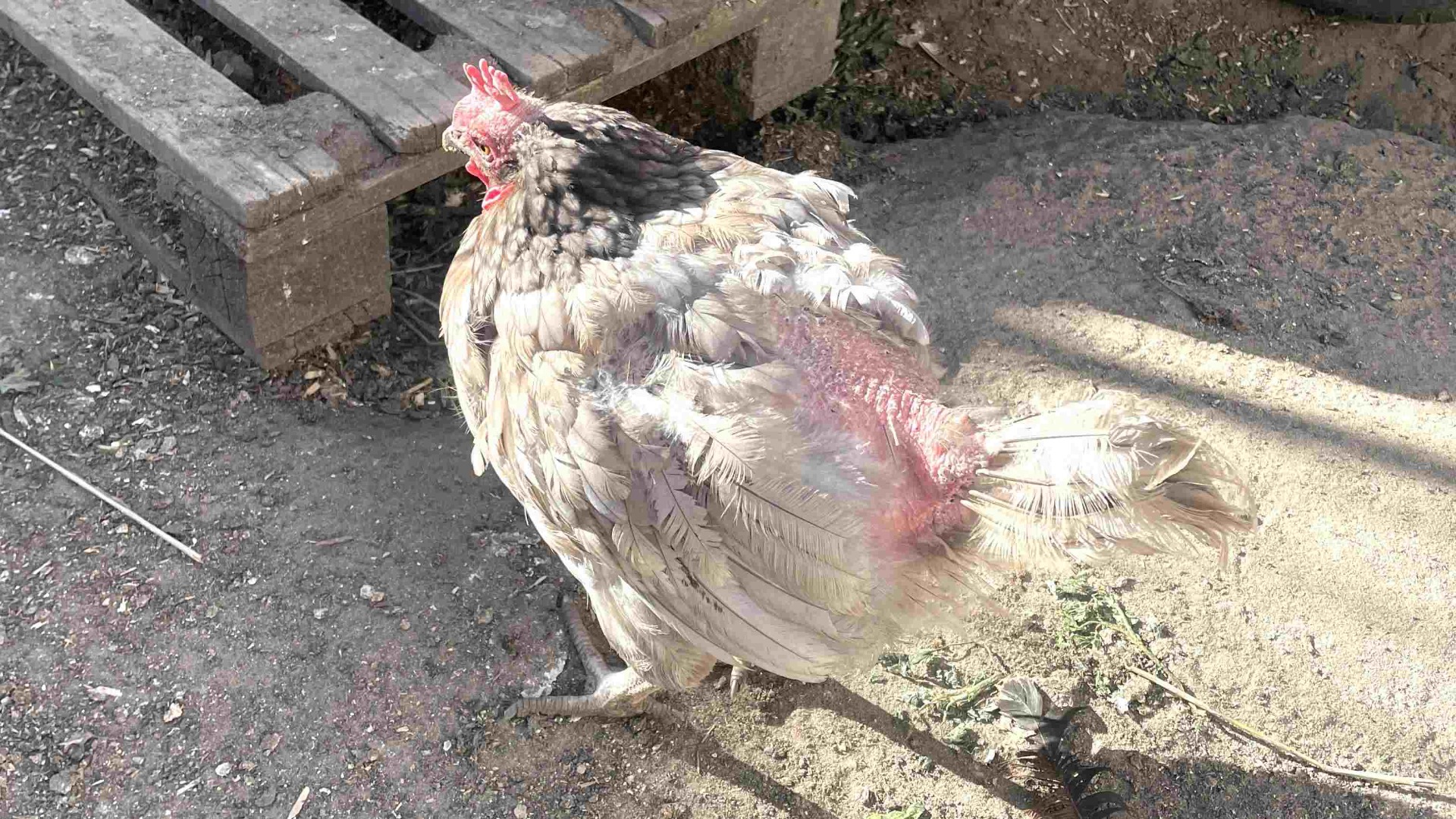
The main signs of poultry red mites in a chicken coop include a sudden drop in egg production, noticeable restlessness after dark and pale combs and wattles caused by anaemia. Characteristic clusters of mites may appear in nesting areas and beneath perches, while small red blood spots can sometimes be seen on eggshells.
- Feather loss – birds experience irritation and itching when poultry red mites feed on them, so they may scratch or pull out feathers, particularly around the rump and back.
- Changes in evening behaviour – poultry red mites feed mainly at night, so chickens may become nervous in the evening, scratch more frequently, vocalise loudly or even refuse to enter the chicken coop.
- Anaemia – poultry red mites feed on blood, and heavy infestations may cause pale combs and wattles.
- Reduced egg production – egg production can fall significantly because of stress, blood loss and general weakening of the birds.
- Red mites on eggs – red mites may sometimes be visible in nesting boxes or directly on eggs. These are usually adult mites that have recently fed on the birds.
- Mite colonies in cracks – a heavy poultry red mite infestation can often be seen with the naked eye as dark clusters in nesting boxes, on perches, door frames, battens and other cracks.
Common Mistakes When Fighting Poultry Red Mites – What Should You Avoid?
Poultry keepers often use random methods against poultry red mites that simply do not work. Because poultry red mites reproduce extremely quickly in warm conditions, controlling an infestation becomes a race against time. What should you avoid?
- Do not rely on only one method – unfortunately, a single treatment will not solve a poultry red mite infestation. It is usually necessary to act on several fronts at the same time:
- Poultry red mite spray – repeat treatment after 5 and 10 days,
- Diatomaceous earth – apply to nesting areas and bedding in the chicken coop,
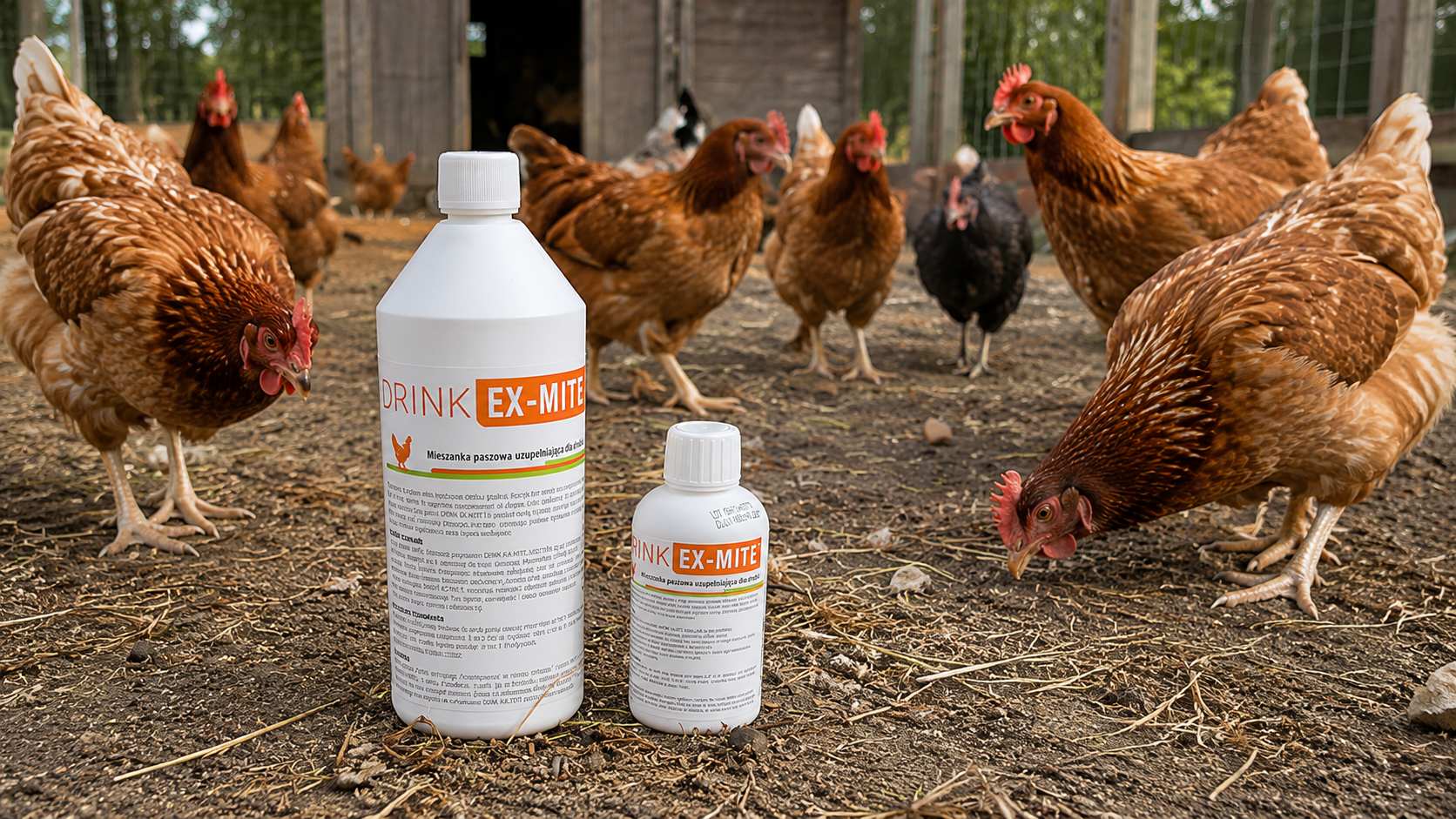
- Drink Ex-Mite for poultry red mites – added to drinking water as part of the control programme.
- Whitewashing the chicken coop with lime during a severe infestation will not solve the problem. Lime can be useful for hygiene and prevention, but it will not eliminate large numbers of mites hidden deep inside cracks, nests or beneath perches.
- Spraying only the chickens – poultry red mites remain on birds mainly while feeding, usually during the evening and night. Spraying only the birds during the day will therefore not reach most of the parasite population. The interior of the building and hiding places also need to be treated with an appropriate poultry red mite control product.
- Using only one spray treatment – even a good poultry red mite spray may not solve the problem after a single application. Mite eggs may survive treatment, so if the procedure is not repeated after 5–7 days, another generation can hatch.
- Do not stop control during colder months – during cool weather, poultry red mite activity decreases considerably, which can mislead poultry keepers. These parasites can survive for months without feeding and may become active again when temperatures rise.
Poultry Red Mite Trap – How to Detect the Parasite Before an Infestation Develops
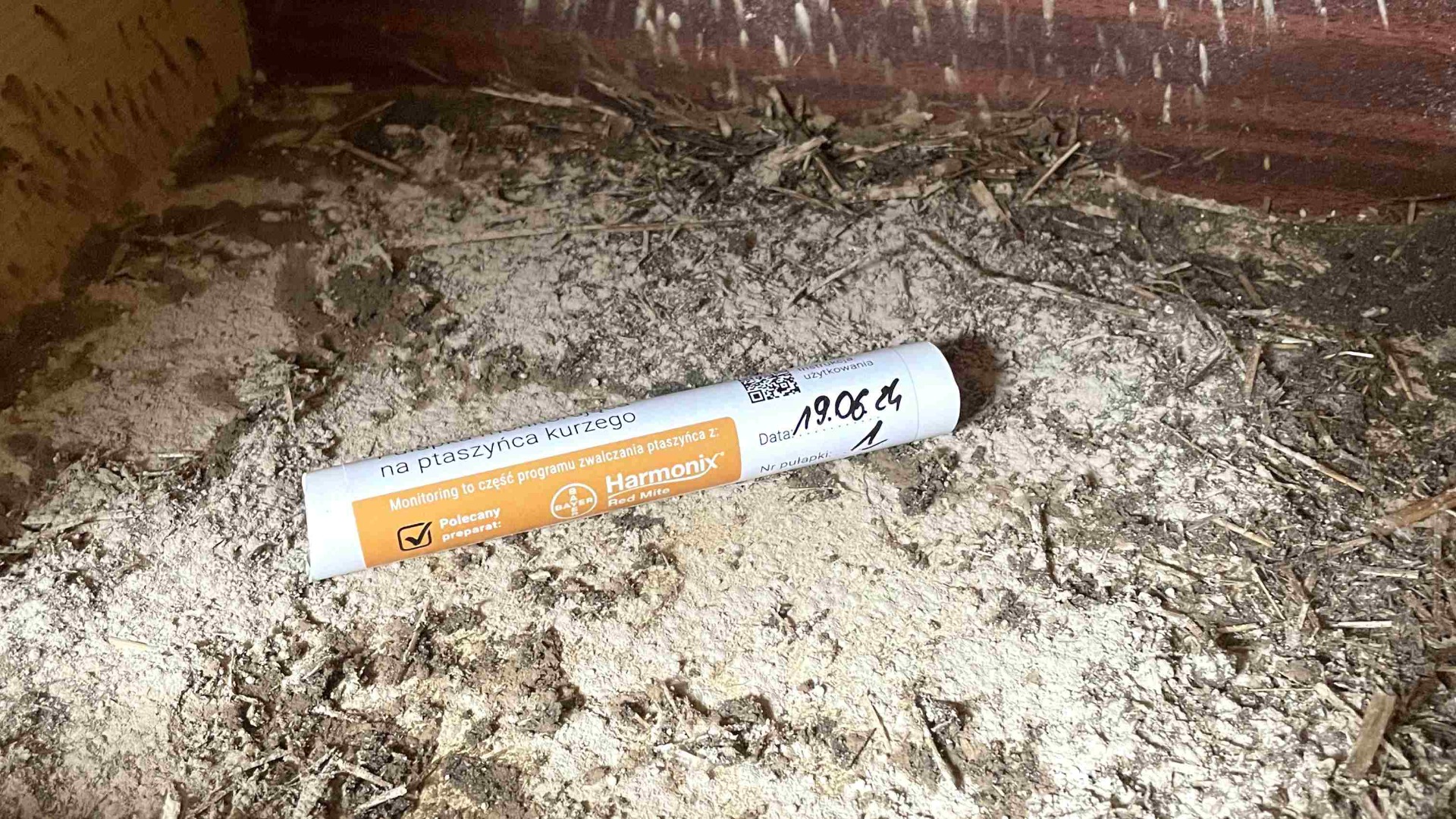
One of the best ways to monitor a chicken coop and detect mites early is to regularly use a poultry red mite monitoring trap. These traps can reveal the presence of parasites at the beginning of an infestation, when the population is still relatively small and may not yet be visible to the naked eye.
How does a poultry red mite trap work? Poultry red mites naturally look for safe hiding places and readily enter narrow cracks. The FER-MITE TRAP poultry red mite monitoring trap imitates an ideal hiding place, making it easier to detect the first mites.
A poultry red mite trap should be placed in areas where chickens spend the most time, especially directly underneath perches or near nesting boxes.
What Do Poultry Red Mites Dislike?
Poultry red mites do not tolerate very high temperatures, dry conditions or damage to their protective outer layer. They may also avoid strong herbal aromas such as tansy, wormwood, mint, thyme and oregano. Smooth, sealed surfaces are also less favourable because they provide fewer hiding places for reproduction.
Understanding these characteristics makes it possible to create a chicken coop environment that is less favourable for poultry red mites.
- High temperatures – very high temperatures can kill mites. Cleaning suitable chicken coop equipment with hot water or steam may therefore help reduce mite numbers where appropriate and safe.
- Dry and abrasive materials – diatomaceous earth for poultry red mites acts mechanically. Its microscopic particles can damage the outer protective layer of mites, contributing to dehydration.
- Herbs such as tansy, wormwood, mint, thyme and oregano – their strong aroma may discourage poultry red mites from certain areas. Herbs alone will not eliminate a severe infestation, but they may be used as part of a broader prevention strategy.
- Light and smooth surfaces – poultry red mites are mainly nocturnal and prefer dark cracks and porous surfaces. Where possible, wooden nesting boxes and perches can be replaced with smooth, easy-to-clean materials. Automatic nesting boxes for laying hens made from metal and plastic are easier to clean and disinfect. Cracks and porous wall surfaces should also be sealed to reduce available hiding places.
FAQ – Frequently Asked Questions About Poultry Red Mites
Can Poultry Red Mites Bite Humans?
Yes, poultry red mites can bite humans, especially during heavy infestations. However, humans are not their preferred long-term host and the mites do not normally remain permanently on human skin.
Can You Eat Eggs from Chickens with Poultry Red Mites?
Eggs themselves are not invaded internally by poultry red mites. However, normal food hygiene should always be followed, and any medicines or pest-control products used in the flock should be checked for withdrawal periods and label restrictions.
How Quickly Does Poultry Red Mite Spray Work?
The effect depends on the product used. Some poultry red mite sprays act within minutes after direct contact with the parasite. Because mite eggs may survive treatment, repeat applications are often necessary according to the product instructions.
Does Lime Kill Poultry Red Mites?
Lime used for whitewashing is not a reliable stand-alone treatment for an established poultry red mite infestation. It can support hygiene and help seal small cracks, but mites hidden deep inside crevices may survive.
What Can You Add to Drinking Water for Poultry Red Mites?
Products such as Drink Ex-Mite are designed for administration through drinking water. They should always be used according to the manufacturer’s instructions and as part of a broader poultry red mite control programme.
Where Do Poultry Red Mites Come From?
Poultry red mites can be introduced into a chicken coop by wild birds such as sparrows or pigeons. They can also be carried on contaminated clothing, equipment or newly purchased poultry.