
The problem of wild animals affects many farms, homesteads and households. Animals such as martens, foxes, otters, crows and hawks may enter areas inhabited by people in search of food, causing significant damage to property and livestock. One of the most effective and proven methods of capturing problem animals is the use of live traps. They make it possible to quickly and effectively capture various wild animals that appear around farms and residential properties.
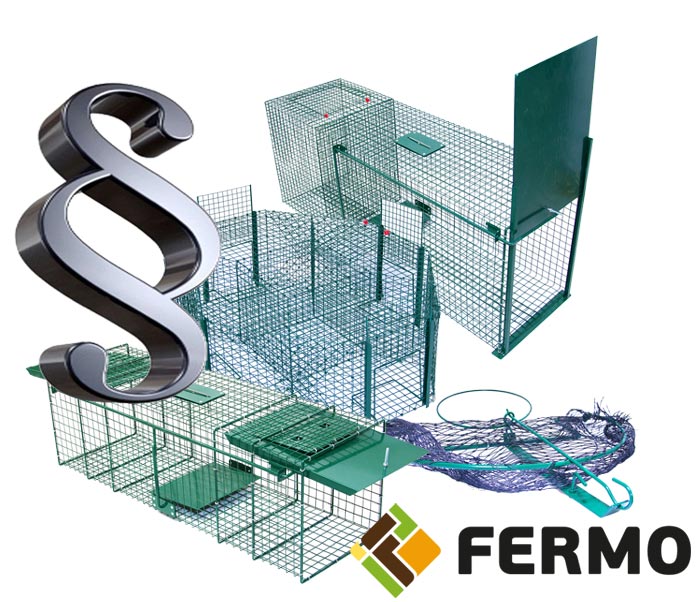
Detailed regulations and rules concerning the use of and other methods of capturing wild animals are governed by the laws and regulations listed below:
Most species of birds and wild animals occurring in Poland are legally protected under the Regulation of the Minister of the Environment of 12 October 2011 on the protection of animal species (Journal of Laws No. 237, item 1419). Pursuant to §7 of the above regulation, a number of prohibitions apply to these species, including the prohibition specified in point 2 concerning intentional mutilation and capture.
Pursuant to Article 56(2)(2) and Article 56(4), in conjunction with Article 52(1)(2), of the Nature Conservation Act (Journal of Laws of 2013, item 627, as amended), the Regional Director for Environmental Protection may, within their area of jurisdiction, authorise the capture of wild animals covered by species protection. Such authorisation may be granted where there are no alternative solutions, provided that the action is not detrimental to maintaining protected wild animal populations at a favourable conservation status and that at least one of the conditions specified in Article 56(4)(1–7) of the Act of 16 April 2004 on Nature Conservation is met.
Furthermore, pursuant to Article 131(14) of the Act of 16 April 2004 on Nature Conservation, anyone who, without the required authorisation, violates prohibitions applicable to animals covered by species protection may be subject to detention or a fine.
Under applicable law, wild animals may be subject to species protection, which is intended to safeguard their natural habitats and populations. A number of legal regulations and standards have therefore been introduced to protect animal welfare and prohibit the intentional capture, mutilation, injury or harming of protected wild animal species. This also applies to the use of traps, which must meet specific requirements and may only be used in certain circumstances and after obtaining the appropriate authorisation. For this reason, each of our live traps is carefully checked for safety to ensure that it does not cause unnecessary harm to captured animals. This allows animals to be captured humanely and without unnecessary injury and, where legally permitted, relocated to an appropriate location where the predator will no longer pose a threat to people or livestock.
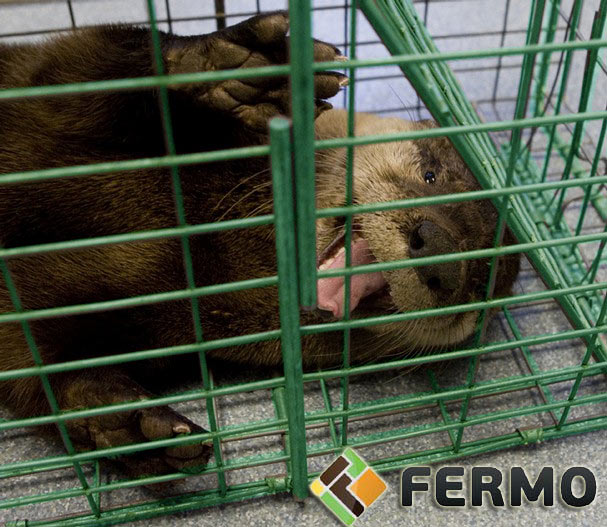
It should be remembered that all activities involving the capture of wild predators and pest animals using or should be carried out only with the required authorisation and under the supervision of the appropriate administrative authorities, such as the Regional Director for Environmental Protection. Permission to use may only be granted when other available methods of dealing with the problem have been exhausted.