
The wide range of available on the market does not necessarily mean that one of them will fully meet our individual requirements. In such a case, there is an alternative – building your own egg incubator. There are many construction components that can be selected and combined freely so that the finished device meets your expectations. Below you will find descriptions of the basic .
Post Contents [hide]
Incubator Housing
The incubator housing should be made from high-quality plastic that provides stable thermal insulation and is easy to clean and disinfect. It is also a good idea to install a transparent viewing window in the lid, allowing you to monitor the egg incubation process without opening the device. The housing should also include ventilation openings that allow excess carbon dioxide and other unwanted gases to escape.
Incubator Heater
Under natural conditions, a hen sitting on eggs provides the heat required for proper embryo development. During artificial incubation, this function is performed by the . It is one of the essential heating components of every egg incubator.
A typical heater may have an output of around 100 W, although this value depends on the size and design of the incubator. Many different heaters are available, varying in shape, power and construction material. They are often made from flexible materials so they can be easily adapted to the shape and dimensions of a particular incubator. Common materials include aluminium and copper alloys.
Incubator Fan
During egg incubation, an adequate flow of fresh air is essential. This can be provided by an efficient .
Combined with the , the fan creates a heating and ventilation system responsible for distributing warm air evenly throughout the incubation chamber.
The shape and angle of the fan blades have a significant influence on air circulation. Properly profiled blades efficiently mix and distribute the air inside the incubator. Fans are available in different designs, including an open design ( ) and an enclosed design ( ).
For safety reasons, open fans should be fitted with a protective to cover the rotating blades.
Automatic Egg Turning Tray
Manual egg turning does not negatively affect incubation, provided that the incubator is not left open for too long. Under natural conditions, a hen also leaves the nest for short periods, for example to eat or drink.
An is therefore not an absolutely essential component of an incubator, but it offers a number of important advantages.
Firstly, properly shaped openings in the tray help protect eggs from damage. Secondly, an egg turning tray significantly improves convenience by automating the turning process. This saves the poultry keeper a considerable amount of time and makes the incubation process much easier.
There are two main egg turning systems: using a manual key or lever, and using an electrically powered motor.
Some egg trays also feature interchangeable , making it possible to incubate smaller eggs such as quail eggs.

Incubator Thermostat
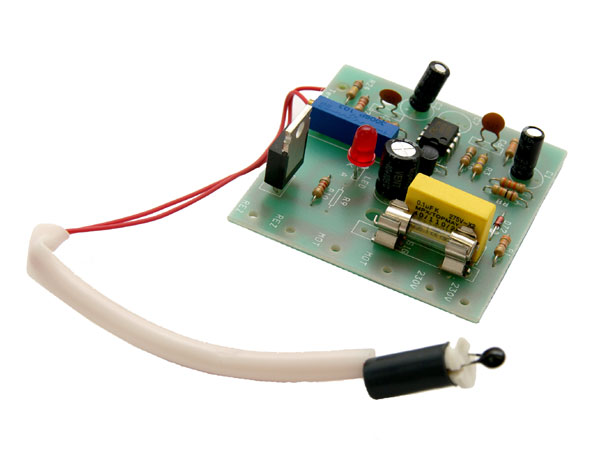
If precise temperature control is important, the incubator should be equipped with a dedicated .
The thermostat works together with the heater, allowing the user to set and maintain the required incubation temperature. The optimal temperature depends on the species and incubation method, but for chicken eggs it is generally around 37.5–38°C.
It should be remembered that the system needs some time to stabilise after switching on, so small temperature differences immediately after start-up are normal. The thermostat automatically controls the heater, switching it off when the set temperature is reached and turning it back on when necessary. This helps maintain stable conditions while reducing unnecessary energy consumption.
Additional Incubator Equipment
Every egg incubator can be upgraded with additional components that make the incubation process easier and more precise.
One useful accessory is a humidity controller. This electronic module can control devices responsible for maintaining humidity, such as a heating element or solenoid valve.
When combined with a , it can provide automatic control over the humidity level inside the incubator.
If the incubator does not have an integrated thermostat or temperature display, you can use an or a to monitor the temperature.
Another extremely useful tool for every poultry breeder is an egg candler. It allows you to examine the inside of the egg and check whether the embryo is developing correctly during incubation.
In summary, building your own egg incubator is not the easiest project, but it is also not excessively complicated if you understand the basic principles of artificial incubation. If you want to create an incubator that fully meets your individual requirements, selecting the right heater, fan, thermostat, humidity controller and egg turning system makes it possible to build a customised and fully functional hatching device.