
Hot summer days are a difficult time for both animals and poultry keepers. Chickens and other farm birds cope with high temperatures much worse than with winter frost. A prolonged chicken coop temperature above 25°C may cause heat stress in poultry, which can be extremely dangerous for the flock. Birds stop eating, their immunity decreases and egg production drops significantly. In extreme cases, heat stress may even lead to bird mortality. That is why the most important thing to remember on hot days is water!
Water makes up approximately 60% of a bird's body. Even relatively small levels of dehydration can seriously impair normal body functions. In this article, you will learn how much water a chicken drinks in summer and how to calculate the amount of water needed during hot weather. We will also explain which chicken drinkers are best – freestanding drinkers or automatic poultry drinking systems – and what you can do to ensure that the water in the chicken coop and outdoor run remains cool, clean and safe for your birds.
How Much Water Does a Chicken Drink in Summer?
The amount of water a chicken drinks depends on its breed, age and environmental conditions. Under normal weather conditions, poultry generally consumes around twice as much water as feed. However, when summer arrives, chickens and other poultry drink significantly more. Chickens do not have sweat glands, so to cool themselves they begin panting – breathing with their beaks open – which increases water loss from the body. The higher the temperature inside the chicken coop, the faster the birds' need for water increases.
- Laying hen – at normal temperatures, a laying hen requires approximately 200–250 ml of water per day. Egg production significantly increases water requirements because an egg consists of around 65% water. During hot weather, an adult laying hen may double or even triple its water consumption. If water is unavailable even for a few hours during this period, egg production may fall significantly and remain lower for several weeks.
- Broilers – these birds grow very quickly and gain weight rapidly, so their water requirements are high in order to support growth and muscle development.
- Young poultry – chicks and young chickens are particularly sensitive to dehydration. Their thermoregulation system is not yet fully developed, so they require constant access to water.
- Waterfowl – ducks and geese – have even higher water requirements. They use large quantities not only for drinking but also for cooling their bodies and cleaning their nostrils. In addition to a drinker, they should have access to a sufficiently deep container of clean water.
| Poultry species | Optimal temperature (20°C) | Elevated temperature (up to 28°C) | High temperature (above 30°C) |
| Laying hens | 200–250 ml | 300–350 ml | 400–550 ml |
| Broilers (5–6 weeks) | 250–300 ml | 350–420 ml | 500–600 ml |
| Chickens (7 weeks) | 160–180 ml | 220–250 ml | 300–400 ml |
| Ducks (adult) | 450–500 ml | 600–700 ml | 900–1200 ml |
| Geese (adult) | 600–700 ml | 850–1000 ml | 1300–1600 ml |
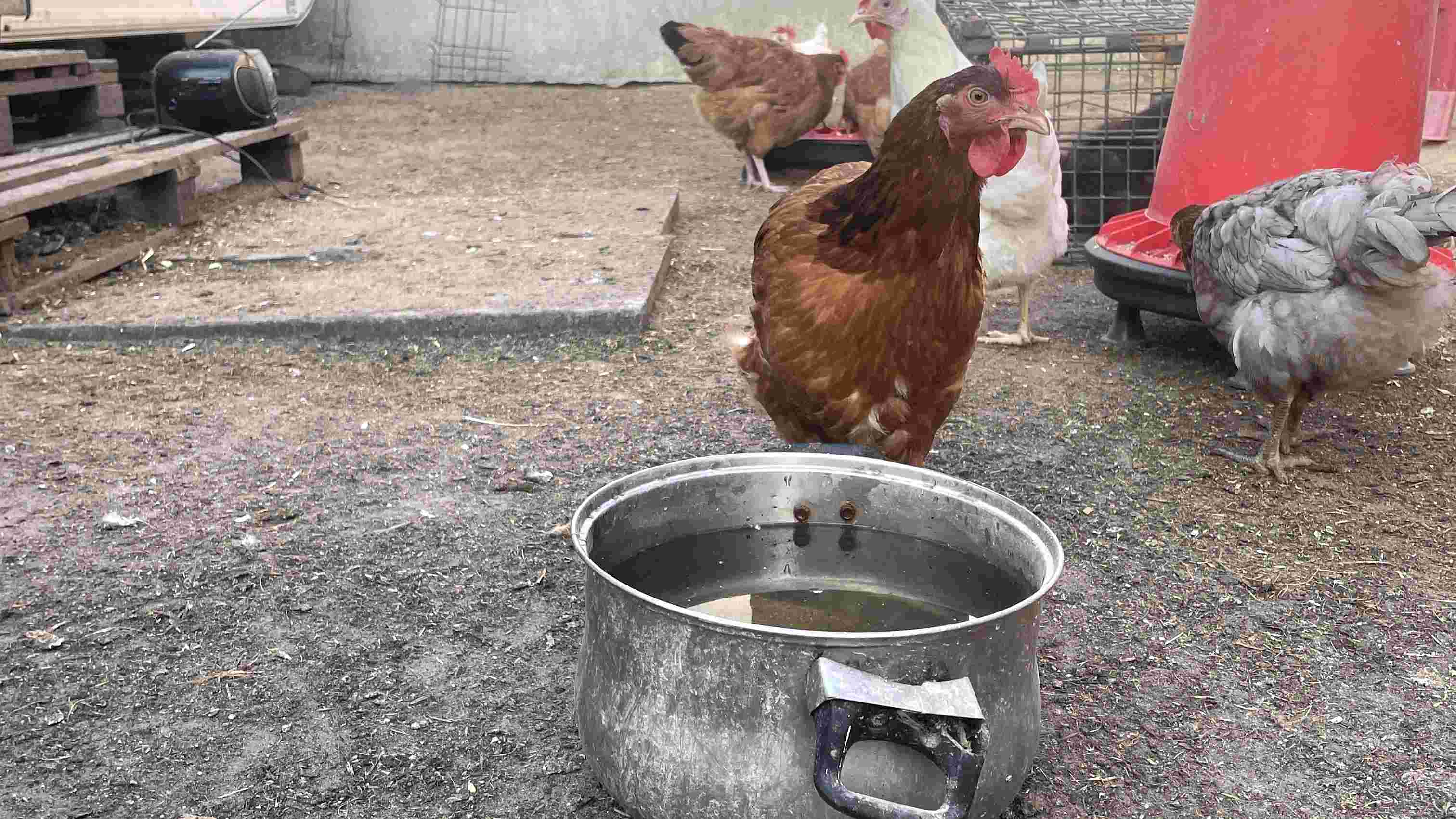
What Is the Best Chicken Drinker for Summer?
A poultry drinker provides birds with constant access to clean and fresh water. This is especially important in summer, when air temperatures are high and poultry requires significantly more water. However, simply filling any water container for chickens is not enough, because the water can quickly become contaminated and may become a source of bacteria and other microorganisms.
So which chicken drinker should you choose? Properly selected poultry drinkers should be matched to the species and flock size. There are two main options available: freestanding chicken drinkers, which are filled manually by the poultry keeper, and automatic poultry drinking systems, which are connected to a mains water supply or water tank and provide continuous access to fresh water.
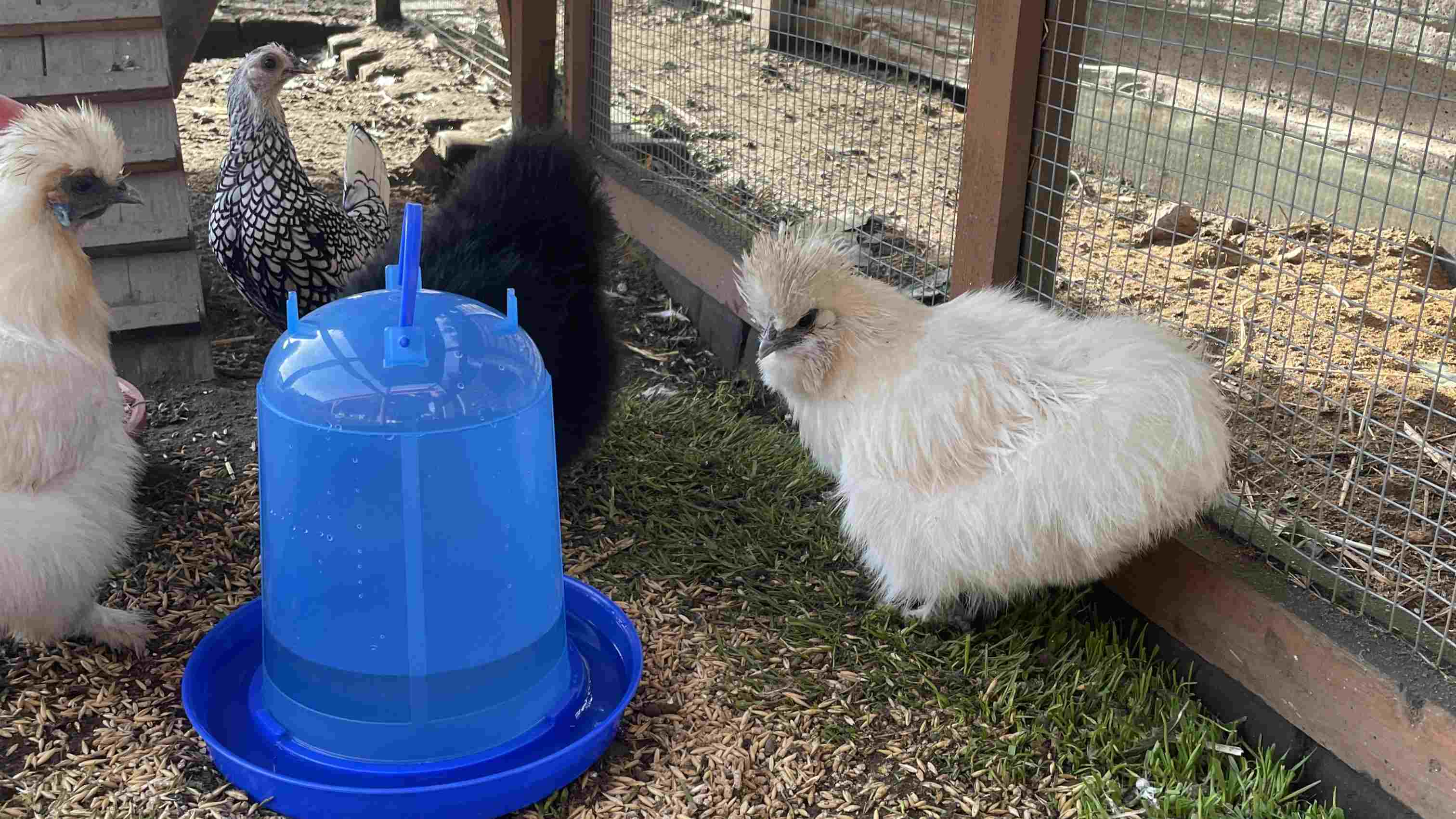
18 L Chicken Drinker and Other Freestanding Drinkers – Which Are Best?
Freestanding drinkers, also known as stationary poultry drinkers, are an excellent solution for flocks where there is no direct access to a mains water supply. The poultry keeper fills them manually using a garden hose or watering can.
Freestanding poultry drinkers are available in a wide range of capacities – from less than 1 litre up to 50 litres. This makes it possible to select the right model for almost any flock, from a single chicken to dozens or even hundreds of birds, including small ornamental poultry and adult turkeys.
A bucket drinker for poultry has a drinking trough around its circumference. The width and height of the trough are designed so that birds can drink comfortably while reducing the risk of contaminating the water.
Freestanding drinkers are also easy to move. Larger models often include carrying handles. An 18 L chicken drinker is easy to clean and disinfect, which is particularly important during hot weather. Many models can also be equipped with legs, raising the trough above the ground to reduce contamination from dust and litter. Larger models such as a 50 L poultry drinker may already include built-in legs.
Freestanding drinkers include:
- Siphon drinkers – the reservoir is filled and attached to the base, while the water level in the trough is maintained automatically by pressure difference.
- Float drinkers – a float valve controls the water supply, keeping the trough filled while preventing overflow.
During hot weather, one very large drinker may not be the best solution because the water should be replaced at least twice a day. It is often better to use two or more smaller drinkers and refill them regularly with fresh water.
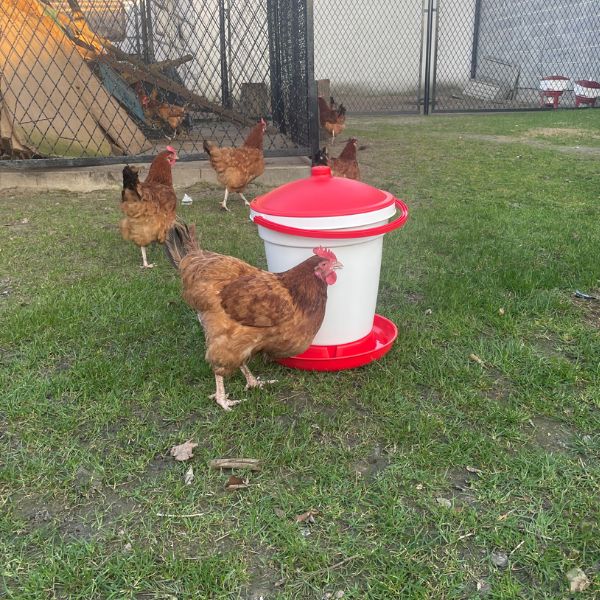
Where Should a Chicken Drinker Be Placed During Hot Weather?
During hot weather, the location of the chicken drinker is extremely important. Avoid sunny areas. Drinkers in outdoor runs should ideally be placed in the shade – under trees, between bushes or underneath a roof or shelter.
Direct sunlight heats the water very quickly, and birds may be reluctant to drink warm water. Drinking water should remain cool and fresh. It is best to place several smaller drinkers around the outdoor run and inside the chicken coop, where temperatures are usually lower. Poultry should never have to search for water during hot weather – it should always be easily accessible.
How Often Should Water Be Changed in a Poultry Drinker?
Filling a large poultry drinker once is not enough to provide water for several days during summer. Water inside the container heats up quickly, creating favourable conditions for bacteria and algae.
During very hot weather, drinking water should be replaced at least 1–2 times per day. Regular water changes help keep it cool and fresh and support the flock during periods of heat stress. Before each refill, rinse the chicken drinker, and ideally disinfect it every second day.
Automatic Poultry Drinkers – Nipple Drinking Lines or Bell Drinkers?
Which poultry drinking system is best for your chicken coop? With larger flocks, it is worth considering an automatic poultry watering system because it saves water and reduces the time spent manually refilling drinkers.
For flocks of more than approximately 100 birds, automatic poultry drinking systems become particularly practical. They can be connected to the mains water supply or to a water storage tank. These systems are usually installed permanently and are not as easy to move as freestanding drinkers.
During hot weather, it may still be useful to add extra freestanding drinkers to the chicken coop or outdoor run so that birds have easy access to water everywhere.
There are two main options:
- Bell drinkers – one drinker can serve approximately 100 birds. They take up more space and usually require connection to a main water line, for example using a 19 mm hose. Birds drink from the circular trough, similarly to freestanding drinkers.
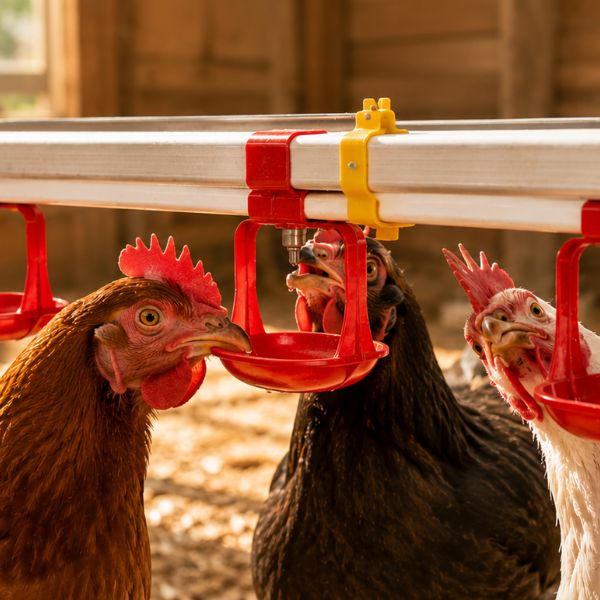
- Nipple drinking lines for poultry – take up considerably less space than bell drinkers. A single poultry nipple drinking line approximately 2–3 metres long can serve more than 100 birds. It can be suspended or mounted on brackets inside the chicken coop. Chickens drink directly from nipple drinkers – when the nipple is activated, water is released in droplets. Adding drip cups helps prevent water from falling onto the litter, keeping the bedding dry and clean.
Poultry Water Acidifier – A Great Solution for Summer Heat
During hot summer weather, poultry keepers may use a water acidifier according to the manufacturer's instructions. It lowers the pH of the water, creating conditions that are less favourable for certain bacteria and algae.
A poultry water acidifier can also be used in automatic drinking systems because biofilm may develop inside water lines and pipes. The product can usually be added to the water storage tank according to the label instructions.
In addition to supporting drinking-water hygiene, water acidification may also support digestive conditions in poultry when appropriately formulated products are used. Any acidifier should be dosed according to its product label and should not replace regular cleaning and disinfection of drinkers and water lines.
Some poultry keepers also use apple cider vinegar for chickens as a traditional water additive. If used, the amount should be selected carefully and should not be added to galvanised metal drinkers.
Q&A – Frequently Asked Questions
How Much Water Does a Chicken Drink During Summer Heat?
An adult chicken may drink around 500 ml or more per day during very hot weather, depending on the temperature in the chicken coop and outdoor run. Water consumption varies with bird size, age, production level and environmental conditions.
How Often Should Water Be Changed in Poultry Drinkers During Summer?
During hot weather, drinking water should be replaced at least once per day and preferably 2–3 times daily when temperatures are very high. Frequent replacement helps keep the water cool and reduces contamination.
What Should You Do If Water in the Poultry Drinker Spoils Quickly?
Clean and disinfect the drinker regularly and keep it in the shade. A suitable poultry water acidifier may also be used according to the manufacturer's instructions to help manage water pH and drinking-system hygiene.
What Is Heat Stress in Poultry?
Heat stress in poultry occurs when birds are unable to remove enough body heat to maintain a normal body temperature. It may result in panting, lower feed intake, reduced egg production, lethargy and, in severe cases, mortality. Birds should have constant access to fresh, clean water and shaded, well-ventilated areas. Electrolytes and appropriate vitamin supplements may also be used according to product instructions during periods of heat stress.