

Are you planning to start your first backyard chicken flock? Looking for a breed with a truly unique appearance? Wyandotte chickens could be an excellent choice. These calm and gentle birds are particularly well suited to backyard and family flocks. Their average egg production is around 180–200 eggs per year, with some hens laying as many as 220–240 eggs during their first laying cycle. Wyandottes are a dual-purpose chicken breed, valued for both egg production and high-quality meat. In addition to their productive qualities, Wyandotte chickens are famous for their distinctive plumage, with feather patterns often resembling fish scales or delicate lace. The breed comes in dozens of beautiful colour varieties and makes an impressive addition to any backyard flock.
In this Wyandotte chicken breed guide, you will learn: how to raise and care for Wyandotte chickens, whether they are easy to keep, what to feed them to maintain a healthy weight, and how much Wyandotte chickens and hatching eggs cost.
Table of Contents ⌄
Where Do Wyandotte Chickens Come From? Breed History
The Wyandotte chicken breed was developed in the United States and officially recognised in 1883. It was created by crossing several different chicken breeds, including the Dark Brahma and Silver Spangled Hamburg. The breed's name was inspired by the Native American Wyandot (Wyandotte) people as a tribute to them.
As interest in ornamental and backyard poultry keeping grew, Wyandotte chickens were introduced to Europe, where their popularity continues to increase. The breed is particularly valued for its distinctive appearance, calm temperament and good egg-laying performance.
Their characteristic body shape makes Wyandottes easy to distinguish from many other chicken breeds. The Wyandotte's body is noticeably rounded, broad and well built. Typical features include a short but wide back and a deep breast, giving the birds their impressive appearance. The broad and well-developed body also reflects the breed's dual-purpose characteristics.
Another distinctive feature is the small, flat rose comb, which narrows towards the back of the head. The overall appearance is completed by a relatively small, broad tail with rounded lines, emphasising the characteristic compact and almost spherical shape of the Wyandotte chicken.
An adult Wyandotte rooster typically weighs around 3.4–3.8 kg, while a Wyandotte hen usually weighs approximately 2.5–3.0 kg. The Wyandotte is therefore considered a medium-heavy, dual-purpose chicken breed.
What Is the Difference Between Bantam and Standard Wyandotte Chickens?
Considering the shared traits of this breed—a rounded silhouette, lush laced plumage, and a flat "rose" comb—it can be described as a smaller replica of the standard Wyandotte. Let's take a look at what sets both varieties apart:
| Feature | Standard Wyandotte | Bantam Wyandotte |
| Hen weight | 2.5–3.0 kg | about 1 kg |
| Rooster weight | 3.4–3.8 kg | about 1.2 kg |
| Annual egg production | 180–200 eggs | 120–160 eggs |
| Egg weight | 55–60 g | 35–45 g |
| Primary purpose | Eggs and meat | Show and ornamental |
| Run space | Requires more space | Requires less space |
As we can see, both the standard and miniature versions of this breed boast impressive annual egg production. So, which variety should you choose? The choice between them comes down to your available space and your primary goal—whether utility or ornamental.
If your main focus is utility, higher egg yield, and you have a larger run available, the standard Wyandotte is the better option. It excels in backyard flocks where birds serve a dual purpose for both egg laying and meat production.
The Bantam Wyandotte, on the other hand, is ideal for breeders with limited space or those looking primarily for an ornamental breed for a hobby flock. Its compact size makes it easy to keep several birds even in a smaller enclosure.
Friendly and Easy to Handle – An Ideal Chicken Breed for Beginners
Wyandotte chickens are known for their calm temperament, making them an ideal choice for beginners. They do well in both small and larger flocks. They are easy-going birds that don't need much to be happy—providing basic, proper care is more than enough for them to thrive.
Their relationship with humans is excellent. These chickens are exceptionally friendly, making them a wonderful addition to families with children. They quickly get used to their keeper and recognize them over time. They are trusting, approachable, and often allow themselves to be handled. What's more, Wyandotte hens make remarkably attentive mothers and hatch chicks with great success. They also integrate easily into mixed flocks, coexisting peacefully without conflict.
How to Prepare for Wyandotte Chickens? Coop, Run and Diet
Despite being a relatively easy breed to keep, Wyandotte chickens require suitable conditions to maintain a healthy body weight, good condition and consistent egg production. Here are some key tips for successfully raising Wyandotte chickens:
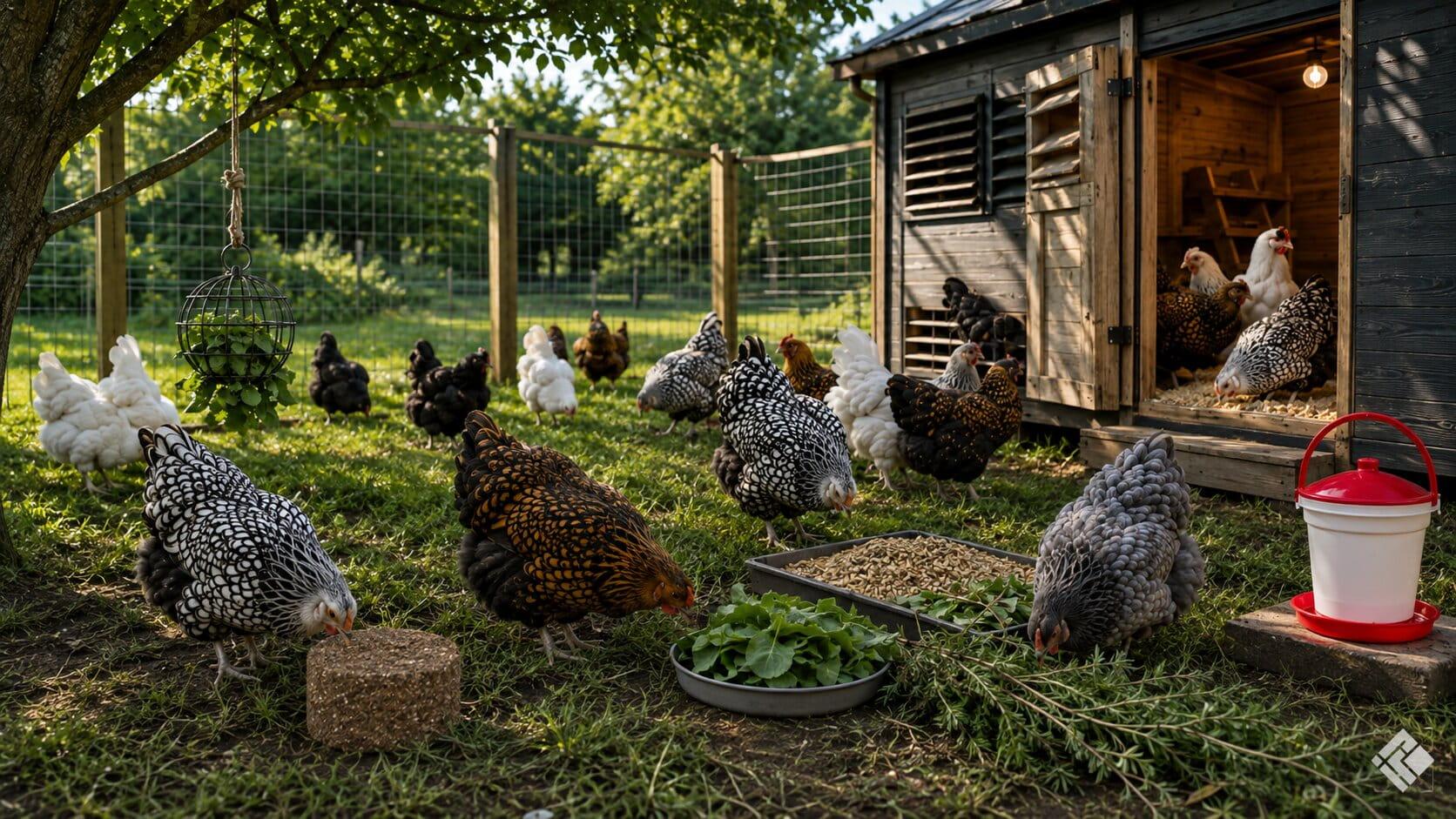
- Spacious outdoor run – sufficient space is important because Wyandotte chickens can be prone to becoming overweight. No more than 10 standard Wyandottes or 15 Bantam Wyandottes should be kept per 1 m². Providing opportunities for activity is also recommended, for example with a pecking block, chicken toys and treat dispensers, as well as access to fresh greens.
- Appropriate fence height – Wyandottes are not particularly strong flyers, so very high poultry fencing is usually unnecessary. A fence height of approximately 100–150 cm is generally sufficient. The same principle applies to perches and nesting boxes – these should be installed relatively low so that the birds can use them comfortably.
- Dry ground and bedding – the litter inside the chicken coop and the surface of the outdoor run should be kept clean and dry. Mud can soil the birds' dense plumage and may increase the risk of health problems.
- Wyandotte chicken diet – to keep Wyandottes in good condition while supporting consistent egg production, their daily diet should be properly balanced. Complete poultry feeds are an excellent foundation, while fresh greens and dried herbs and feed supplements can provide additional variety.
- Protection from summer heat – because of their dense plumage, Wyandotte chickens may be more susceptible to overheating during hot weather. On warm days, they should have access to shaded areas in the run, such as a covered section or natural shade beneath trees. The chicken coop should also be properly ventilated. Constant access to fresh, clean drinking water is essential – automatic poultry drinkers are particularly convenient because they maintain a regular water supply.
- Protection during cold weather – although Wyandotte chickens are known for their good cold tolerance, a dry and properly protected chicken coop is still important for maintaining their health and comfort during winter. The coop should be protected from draughts and the bedding should remain dry.
Although Wyandotte chickens adapt well to different keeping conditions and generally tolerate temperature changes well, they thrive when given enough space to move and forage freely. A properly prepared chicken coop and outdoor run improve bird welfare and help support good egg production and long-term health.
Cost of Wyandotte Chickens and Eggs – Why Add Wyandottes to Your Flock?
Wyandotte chickens are very popular in Poland and have a well-established place among ornamental poultry breeders. They are valued primarily for their distinctive appearance and calm temperament. They are also frequently seen at poultry shows, especially in bantam varieties. Adding Wyandottes to an existing flock is usually straightforward, as they are generally not an aggressive or highly conflict-prone breed.
Before buying a new breed, it is important to choose a reliable breeder and check the birds’ overall health. Newly purchased chickens should not be introduced directly into the existing flock. A quarantine period of around 3–4 weeks is recommended, followed by a gradual introduction through a wire partition or fence. This helps reduce the risk of disease, stress, feather pecking and aggressive behaviour.
Wyandotte chicken prices vary depending on the bird’s age, quality and intended purpose, for example backyard keeping or exhibition breeding. Typical prices are approximately:
- Wyandotte chicks: PLN 20–40 each.
- Young hens or cockerels: PLN 70–150 each.
- Adult Wyandotte chickens: PLN 150–200 each.
The average price of Wyandotte hatching eggs is around PLN 5.00–7.00 per egg. By comparison, standard table eggs of a similar size (M) typically cost around PLN 1.50–3.00 per egg.
Breeding Wyandotte Chickens – Is Egg Incubation Difficult?
Wyandotte hens have a very strong maternal instinct, making them attentive and devoted mothers who eagerly sit on eggs and care for their young. During brooding, provide the hen with a quiet, peaceful spot away from the rest of the flock. Ensure she has continuous access to fresh water and feed right beside the nest, and keep a close eye on her overall health.
To ensure Wyandotte chicks grow healthy and strong, a properly equipped brooder is essential. Maintain correct temperature, good hygiene, and proper vitamin supplementation as the foundation of post-hatch care. You can purchase brooding accessories, feeds, and supplements either separately or in convenient all-in-one starter kits.
- One day after hatching – hen or cockerel? How to tell them apart:
Pay close attention to the down coloration on the underside of the chick. If yellow feathers stretch continuously along the belly from the crop down to the vent, it is a cockerel. On a pullet, the yellow coloration appears only in the area immediately surrounding the vent.

Artificial incubation of Wyandotte hatching eggs takes the same amount of time as standard layer hens—21 days. During the first stage (days 1–18), the temperature should be kept at 37.7°C–38.0°C with humidity around 45–55%. Regular egg turning is crucial during this phase to ensure proper embryo development. Before starting incubation, select appropriate eggs that are fresh, free of cracks, and of proper weight and size.
During the hatching stage (days 19–21), lower the temperature slightly to 37.5°C–37.7°C and increase humidity to 65–70%. Stop turning the eggs at this point to allow the chicks to position themselves and hatch easily.
Wyandotte Chicken Colours – Which Varieties Are Most Common and How Do They Differ?
One of the greatest assets of the Wyandotte is its strikingly showy, abundant plumage, which comes in a vast array of color patterns. Depending on the variety, anywhere from 20 to 35 distinct colorations exist—ranging from classic, solid shades to signature laced patterns with contrasting borders. Feather appearance is influenced by genetics, sex, and the specific breed line.
Among the most recognizable is the Gold Laced Wyandotte, whose golden-amber feathers are sharply edged with black borders, creating a distinctive fish-scale effect. The Silver Laced Wyandotte features a similar pattern, but with cool, silvery tones. Breeders also favor White Wyandottes, noted for their snow-white plumage contrasting with bright yellow legs, and Black Wyandottes, which showcase a deep black coat with a subtle greenish sheen.
Also noteworthy are several unusual varieties that stand out in any flock: the Partridge Wyandotte (available in various shade variations) and the Blue Gold Laced Wyandotte, which pairs warm gold with cool blue tones.

Pros and Cons of Wyandotte Chickens – Are They Worth Keeping?
Like any breed, the Wyandotte has its own strengths and weaknesses. Here is what you should know and prepare for before starting your flock:
| Advantages of Keeping Wyandotte Chickens |
| Attractive appearance – available in a wide range of beautiful colour varieties. |
| Good egg production – typically around 180–200 eggs per year. |
| High-quality meat – thanks to their broad, well-built body. |
| Good cold tolerance – Wyandottes cope well with winter conditions. |
| Calm temperament – generally gentle and well suited to backyard chicken keeping. |
| Versatile dual-purpose breed – suitable as both ornamental chickens and productive birds for eggs and meat. |
| Disadvantages of Keeping Wyandotte Chickens |
| Prone to becoming overweight – overfeeding combined with insufficient exercise can cause Wyandotte chickens to gain weight quickly. |
| Require a spacious outdoor run – sufficient space and regular activity help prevent obesity and related health problems. |
| Sensitive to overheating – their dense plumage can make Wyandottes more susceptible to heat during hot weather. |
| Not strong flyers – their heavy, compact body limits their ability to fly. |
| Can become broody – Wyandotte hens may develop a strong brooding instinct, temporarily reducing or stopping egg production. |
Interesting Facts About Wyandotte Chickens
- Wyandotte chickens are known for their hardiness, and one of the most famous poultry stories often associated with this breed is Mike the Headless Chicken. He survived for 18 months after losing most of his head and became a major attraction for visitors. His owner kept him alive by feeding small amounts of grain and liquid food with a dropper.
- Wyandotte roosters do not have a large upright comb. Instead, they have a flat rose comb that resembles a small button. Because it has a smaller exposed surface area, it is less susceptible to frostbite, which makes the breed well suited to colder climates and winter poultry keeping.
- Compared with many other chicken breeds, Wyandotte chickens are relatively poor flyers and usually only jump or fly short distances. For this reason, they generally do not require very high fencing.