
Laying hen keepers who raise poultry for their own needs want to produce the healthiest possible eggs. A strong eggshell is one of the best signs that the flock is properly cared for and that the birds are receiving the nutrients they need. However, simply allowing chickens access to an outdoor run is often not enough. A hen may not always find all the nutrients required to produce healthy eggs with strong shells.
Soft eggshells are a common problem in backyard chicken coops. Soft-shelled eggs may break underneath the hen while still in the nest, and sometimes they are so fragile that it is difficult to carry them into the house without damage. In this article, we present simple and inexpensive ways to strengthen eggshells. These practices are worth introducing into your flock because stronger shells mean fewer losses and better egg quality.
Post Contents [hide]
- Why Are Chicken Eggshells Soft?
- Feed Chalk for Chickens – A Quick Way to Supplement Calcium
- Oyster Shells for Chickens – A Natural Way to Support Strong Eggshells
- Eggshells – A Free and Effective Calcium Supplement
- Vitamin D3 for Laying Hens – Why Calcium Alone Is Not Enough
- FAQ – Frequently Asked Questions About Calcium for Chickens
Why Are Chicken Eggshells Soft?
Let's start with the source of the problem: why do chickens lay eggs with soft shells? Although an occasional soft-shelled egg is not always a reason to panic, it is an important sign that something may need attention.
The main cause is often calcium deficiency in chickens. Calcium is the basic building material of the eggshell. When there is not enough calcium available, the shell may become thin, weak or may even fail to form properly, causing the egg to break very easily.
A laying hen is biologically adapted to produce eggs, so if her diet does not provide enough calcium for shell formation, her body may begin drawing calcium from her own bones. Over time, this can weaken the bird and contribute to skeletal and leg problems.
How can you make eggshells harder? The daily diet should contain suitable poultry feed supplements that provide calcium, such as feed-grade calcium carbonate, oyster shells for chickens or properly prepared crushed eggshells.
Other possible causes of weak shells include very high laying rates, stress and excessive heat inside the chicken coop. All of these factors may affect shell quality, which is why proper calcium supplementation is essential in every backyard laying flock.
Feed Chalk for Chickens – A Quick Way to Supplement Calcium
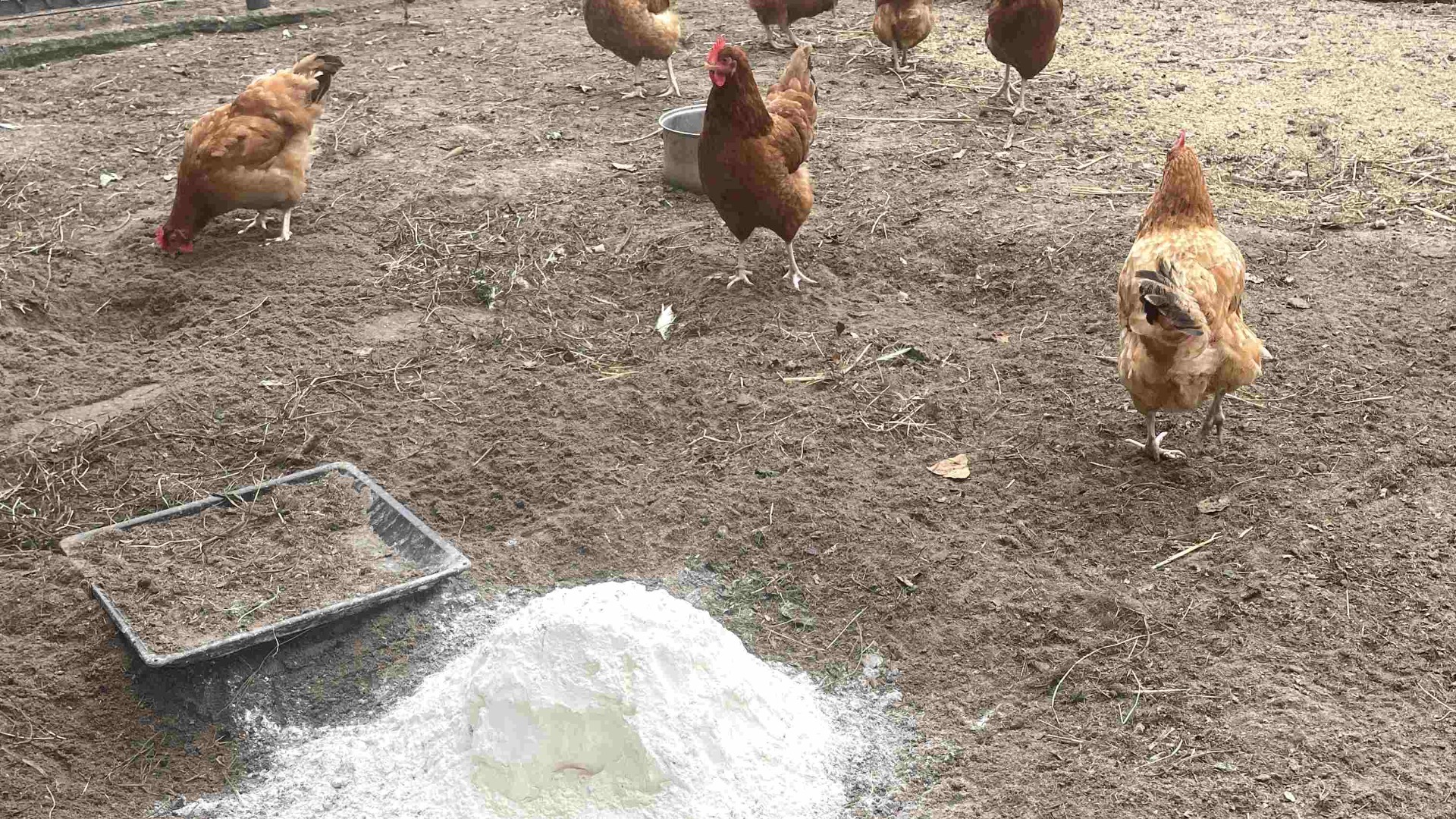
Feed chalk for chickens is essentially natural calcium carbonate (CaCO3) obtained from finely ground limestone. High-quality feed-grade calcium carbonate for chickens should be carefully processed and purified before being used as a poultry feed supplement.
A suitable particle size can make the product easier for birds to consume and incorporate into feed. The source article recommends a fraction of approximately 0.4–3.0 mm for laying hens.
- Feed chalk for chickens – what are the benefits? Regular calcium supplementation supports strong, smooth eggshells as well as healthy bones and normal muscle function.
- How should feed chalk be given to chickens? It can be offered in a separate feeder or mixed directly into a complete feed mixture.
- Feed chalk dosage for laying hens: according to the source article, when included in a home-mixed feed it can make up approximately 3–5% of the mixture. This corresponds to around 3–5 kg per 100 kg of feed. When provided separately, the article suggests approximately 10 g per hen per day.
- Feed chalk – price and cost-effectiveness: calcium carbonate is one of the simplest and least expensive forms of calcium supplementation for laying hens.
Oyster Shells for Chickens – A Natural Way to Support Strong Eggshells
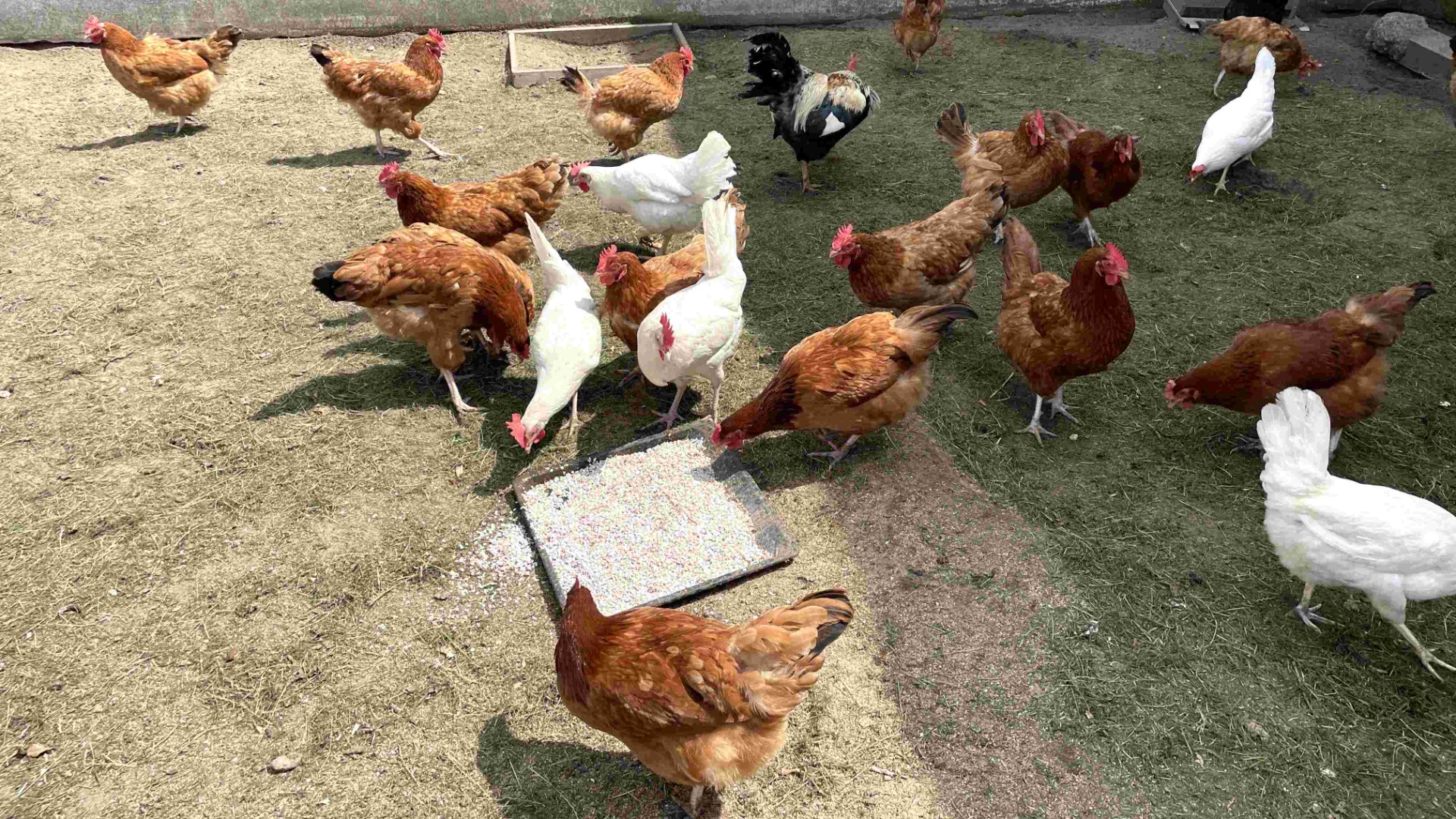
Another natural supplement used to support strong eggshells is oyster shell for chickens. Compared with finely ground calcium products, larger shell particles break down more slowly in the digestive system.
This is particularly useful because eggshell formation occurs largely during the night, when the hen is not actively eating. Slow-release calcium sources can therefore help maintain calcium availability for a longer period.
Oyster shells for poultry provide calcium needed for eggshell formation, skeletal strength and normal muscle function. Their coarse structure can also support normal gizzard function when birds consume whole grains.
For this reason, oyster shell is often provided in addition to feed chalk or other calcium sources. It is best placed in a separate feeder so that the birds can consume it according to their individual needs.
Laying hens are able to regulate their intake to some extent and will often consume more shell material when their calcium requirements increase.
Eggshells – A Free and Effective Calcium Supplement
Products already available in the kitchen can also be reused to support eggshell quality. Chicken eggshells are a natural source of calcium and can be fed back to laying hens after proper preparation.
How should eggshells be prepared for chickens? First, they should be dried thoroughly. They can also be heated in the oven to reduce moisture and contamination. After drying, the shells should be crushed very finely so that the birds do not associate them with freshly laid eggs.
The shells can be crushed using a blender, rolling pin or coffee grinder. Ground eggshells can then be mixed with the daily feed or provided in a separate chicken feeder.
The source article recommends approximately 3–5% eggshell material in the daily diet when used as part of a home-prepared mixture. It is one of the simplest ways of reusing a natural source of calcium.
Vitamin D3 for Laying Hens – Why Calcium Alone Is Not Enough
Calcium for laying hens is only one part of maintaining strong eggshells. Vitamin D3 is also essential because it supports the absorption and metabolism of calcium and phosphorus.
If the bird does not receive enough vitamin D3, calcium utilisation may be reduced even when calcium supplements such as feed chalk or oyster shells are available.
Natural sunlight contributes to vitamin D metabolism in birds, which is why hens with good outdoor access during sunny months may have better natural support in this area. During autumn and winter, however, natural UV exposure may be limited. Artificial coop lighting does not necessarily provide the same ultraviolet spectrum as sunlight.
In such situations, appropriate vitamin supplements for chickens may be used, for example products containing vitamins A, D3 and E, according to the manufacturer's instructions.
In summary, if you want consistently strong eggshells, remember the essential combination of calcium for chickens and vitamin D3.
FAQ – Frequently Asked Questions About Calcium for Chickens
How Should Calcium Be Given to Chickens?
According to the source article, calcium supplements used in a home-mixed ration may account for approximately 3–5% of the daily feed mixture, or around 3–5 kg per 100 kg of feed.
What Is the Best Calcium Supplement for Laying Hens?
Feed-grade calcium carbonate is one of the most commonly used calcium sources. The source article recommends a coarse fraction of approximately 0.4–3 mm.
How Should Feed Chalk Be Given to Chickens?
Feed chalk can be mixed with complete feed at approximately 3–5 kg per 100 kg of feed, according to the source article. It can also be offered separately, with the article suggesting around 10 g per hen.
Can Chickens Eat Eggshells?
Yes. The shells should first be dried, preferably heat-treated, and then crushed thoroughly so that hens do not learn to associate them with fresh eggs.
Why Does a Hen Still Lay Soft-Shelled Eggs Even When She Gets Calcium?
Possible reasons include insufficient vitamin D3, stress, high laying intensity, heat or health problems. A slow-release calcium source such as oyster shell may also be useful because shell formation continues during the night.
What Is the Best Way to Give Oyster Shell and Feed Chalk?
Feed chalk can be mixed into the daily ration, while oyster shells for chickens are usually best offered separately so that birds can consume them according to their needs.
What Should You Do If a Hen Lays an Egg Without a Shell?
Check the bird's calcium and vitamin intake, make sure the diet is properly balanced and assess whether stress, heat or illness could be contributing to the problem. If shell-less eggs continue to occur, veterinary advice may be appropriate.