
Poultry red mite (a species of mite – Latin: Dermanyssus gallinae) is a highly troublesome parasite that is difficult to eliminate from poultry facilities. It occurs both on industrial poultry farms and in small backyard chicken coops or ornamental bird breeding facilities. It can infest chickens, turkeys, guinea fowl, pheasants, pigeons and many species of wild birds. It is harmful to birds at every stage of life, from chicks to adults, regardless of the poultry production system used. Poultry red mites are a problem faced by both hobby keepers and professional poultry producers. They can be considered one of the most harmful external parasites affecting poultry.
Post Contents [hide]
Poultry Red Mite – Biology
Poultry red mites, sometimes incorrectly referred to as chicken fleas or chicken lice, have an elongated, oval body and range in colour from greyish-yellow to red after feeding. Adult mites measure approximately 0.5–1.0 mm in length, depending on sex and developmental stage. Females are larger than males.
These external poultry parasites feed primarily on the blood of birds , which is why they are known as poultry red mites. However, there are also cases where poultry red mites feed on other animals and even humans, especially people working in poultry facilities. Blood meals are required for reproduction and for progression through subsequent developmental stages – larva, nymph and adult.
Poultry Red Mite – Appearance and Body Structure
Adult poultry red mites have four pairs of legs, one pair of which functions primarily as sensory organs. This allows them to move quickly across the skin of their hosts. At the front of the body, the mite has chelicerae, which form part of its mouthparts. Female poultry red mites lay their eggs away from the bird’s body, in hiding places such as small cracks and crevices where they remain during the day. Favourable conditions for population development include temperatures of around 20°C and relative humidity of approximately 60–70%.
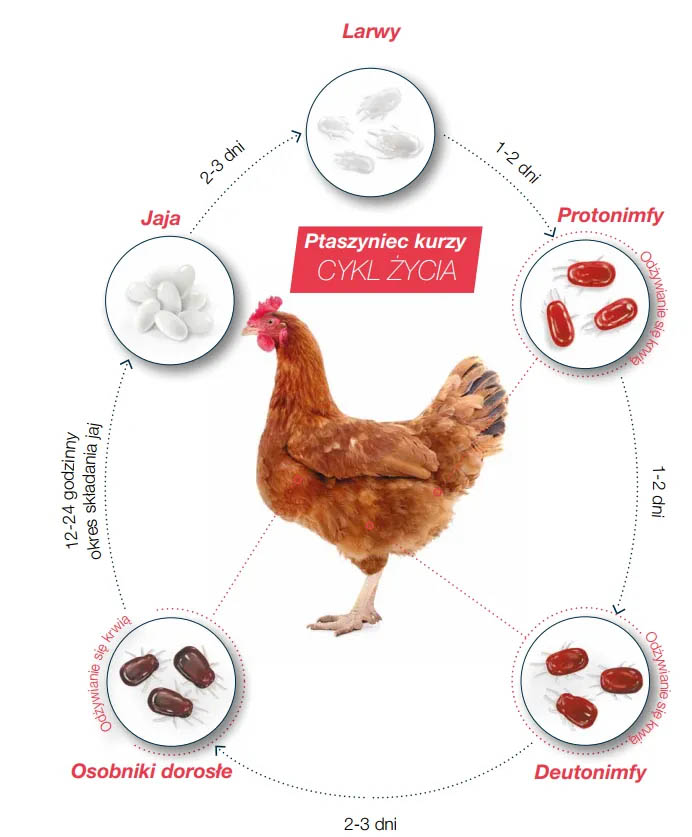
Poultry Red Mite Life Cycle
- Poultry red mites have a very high reproductive rate,
- Blood-fed female mites may lay up to 8 eggs per day for several weeks,
- Larvae hatch approximately 2–3 days after the eggs are laid,
- Under favourable humidity conditions, poultry red mites may develop from larvae into blood-feeding adults within approximately 7 days,
- Poultry red mites are highly resistant to cold and periods without food,
- Without access to blood, they may survive in a dormant state for up to 8 months,
- Poultry red mites leave their hiding places mainly to feed on birds' blood, after which they quickly return to shelter and continue reproducing,
- Heavy red mite infestations reduce the overall condition of poultry,
- Several months may pass before a poultry keeper notices an infestation, giving the parasites enough time to multiply on a large scale.
Poultry Red Mite – Where It Lives and How It Behaves
Poultry red mite, Dermanyssus gallinae, feeds mainly at night while birds are resting. During the day, the mites hide in cracks and crevices in floors, walls, roofs, nest boxes and poultry house equipment. Warm, sheltered crevices near nesting areas are particularly common hiding places. In pigeon lofts, poultry red mites may also be found around pigeon nests.
The largest are usually observed between July and September, although this does not mean the mites disappear completely in winter. They can still occur in heated poultry buildings.
Poultry red mites leave their hiding places at night mainly to feed on the blood of chickens, turkeys or pigeons. Their four pairs of legs allow rapid movement, while their chelicerae cut the skin of the bird. Poultry red mite introduces saliva at the feeding site and then draws blood using specialised mouthparts. Severe infestations negatively affect the condition of poultry, including young birds. When the mite population becomes very large, poultry red mites may also contribute to increased mortality.
Poultry Red Mites – Risks to Chickens, Other Animals and Humans
Poultry red mites are primarily parasites of birds, but they can also move onto the skin of domestic animals and even humans. Poultry red mites may feed on the blood of some mammals. In horses, cattle, rabbits, dogs and cats, infestations may cause skin lesions resembling those seen with lice or mange. The affected skin may become thickened and covered with dried serous exudate. Poultry red mites have also been found in crevices around the ears, nose and beak of birds, although they mainly feed on exposed skin.
Clinical signs in birds depend on the severity of the poultry red mite infestation. The sensitivity of birds to bites also depends on age. Heavy parasite burdens can be especially dangerous for young chicks and juvenile birds and may contribute to increased poultry mortality.
Poultry Red Mite – Main Risks
- Metabolic disorders, loss of appetite, followed by weakness and weight loss in chickens,
- Rapid drop in egg production, in severe cases even by up to 30%,
- Deterioration of ,
- Possible transmission of poultry pathogens,
- Restlessness and stress among poultry, with birds avoiding nests heavily infested with mites,
- Anaemia in heavily infested birds, which in extreme cases may lead to death,
- A single bird may host very large numbers of poultry red mites, resulting in significant blood loss during severe infestations,
- Skin damage, bacterial contamination, feather loss caused by scratching and damaged plumage,
- Stressed birds may become aggressive and peck one another; in severe cases, this can escalate into severe cannibalism .
Can Poultry Red Mites Bite Humans?

Poultry red mites in a chicken coop can also be extremely troublesome for poultry farm workers and backyard keepers. Daily work and direct contact with birds may allow mites to get onto clothing and human skin. People can then unintentionally transport the mites to other livestock buildings, such as pig barns, cattle sheds or stables, and eventually even into their homes.
At night, poultry red mites may bite sleeping people. The bites may initially be painless, but itching, small skin lesions and allergic reactions can appear later. These reactions may be particularly unpleasant for children and adults who are sensitive to mite saliva. Symptoms usually disappear within a few days, although in some cases they may develop into more severe skin inflammation, erythema or persistent lesions accompanied by intense itching.
Occupational exposure to poultry red mites may also contribute to allergic and respiratory symptoms in people working around heavily infested poultry facilities. The mites are capable of mechanically carrying poultry pathogens, which is another reason why rapid detection and effective poultry red mite control are so important.
Not sure whether you have poultry red mites in your chicken coop? Read our article: How to Detect Poultry Red Mites and Get Rid of Them!.