
Poultry keeping is not limited to specialised farms housing thousands of birds at the same time. It also includes small backyard flocks consisting of just a few or a dozen birds. These animals often fulfil several functions at once – they provide eggs, meat for home consumption, fertilise plants and can also be kept for ornamental purposes. Interestingly, many of these advantages are combined in the Indian Runner duck, a breed that has been gaining popularity in recent years.
Post Contents [hide]
- Where Does the Name Indian Runner Duck Come From?
- Indian Runner Duck – Breed Characteristics
- What Conditions Do Indian Runner Ducks Need?
- Keeping Indian Runner Ducks for Eggs and Meat – Is It Worth It?
- Indian Runner Ducks as Natural Slug Control
- How Much Does an Indian Runner Duck Cost?
- Who Are Indian Runner Ducks Best Suited For?
Where Does the Name Indian Runner Duck Come From?
The breed became widely known in Poland under the name Biegus indyjski through English-speaking countries, particularly Great Britain. The Polish name is therefore a literal translation of the original British term, Indian Runner Duck. However, the name is somewhat misleading, as these ducks actually originated from areas that are now part of Indonesia and Malaysia (Cherry et al., 8), which were historically referred to as the East Indies.
That, however, explains only part of the name. The other key factor is the breed’s distinctive body shape and unusual way of moving. The word “Runner” refers to the characteristic way these ducks walk and run. Unlike many familiar domestic ducks, they do not waddle heavily from side to side. Thanks to their upright posture and legs positioned further towards the rear of the body, Indian Runner ducks can move very quickly across the ground – they can practically run. This distinctive movement became one of the breed’s trademarks and inspired its name.
Indian Runner Duck – Breed Characteristics
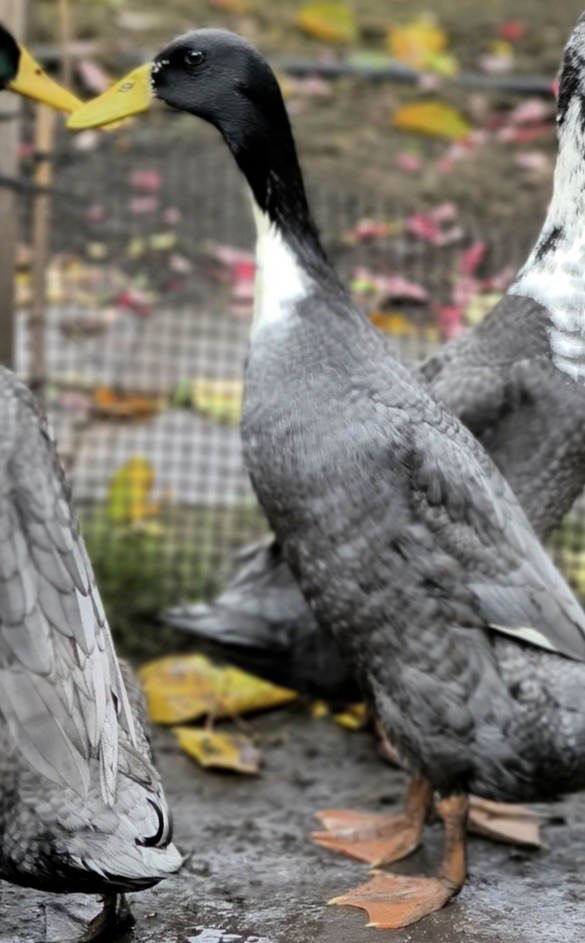
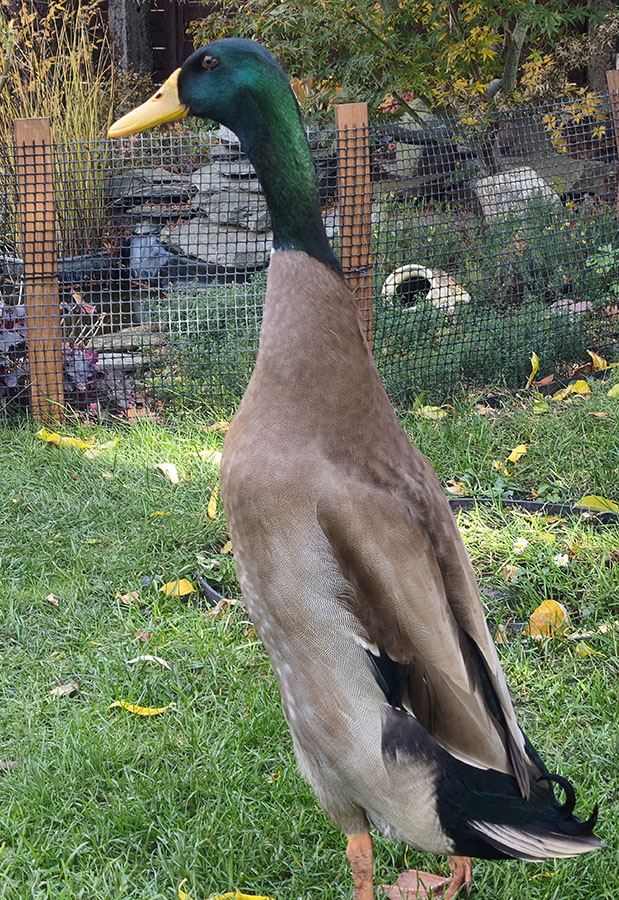
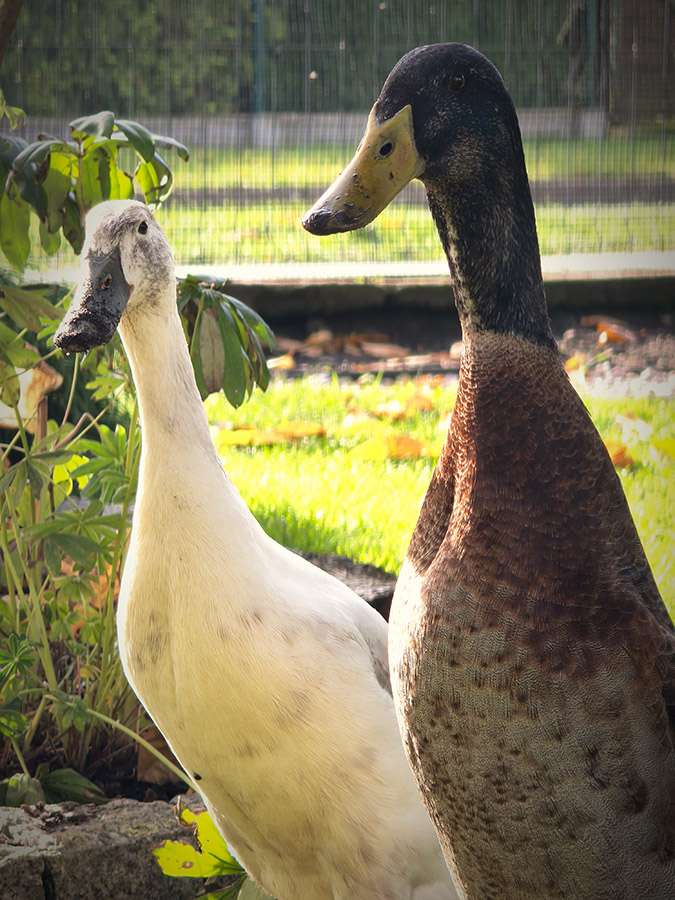
As already mentioned, Indian Runner ducks are distinguished by their very characteristic upright body shape and fast movement, while their long neck may even resemble the silhouette of a penguin. At first glance, they look quite different from most other duck breeds.
The head is relatively small, and the forehead flows smoothly into a well-developed bill, which is most often yellow, although the colour depends on the variety. Their dark brown eyes are positioned relatively high on the head. The body is long and cylindrical, while the wings are comparatively short. In practice, their anatomy prevents them from true flight – they can only make short hops or brief fluttering movements when crossing low obstacles. The tail continues the line of the back (Malik, 254).

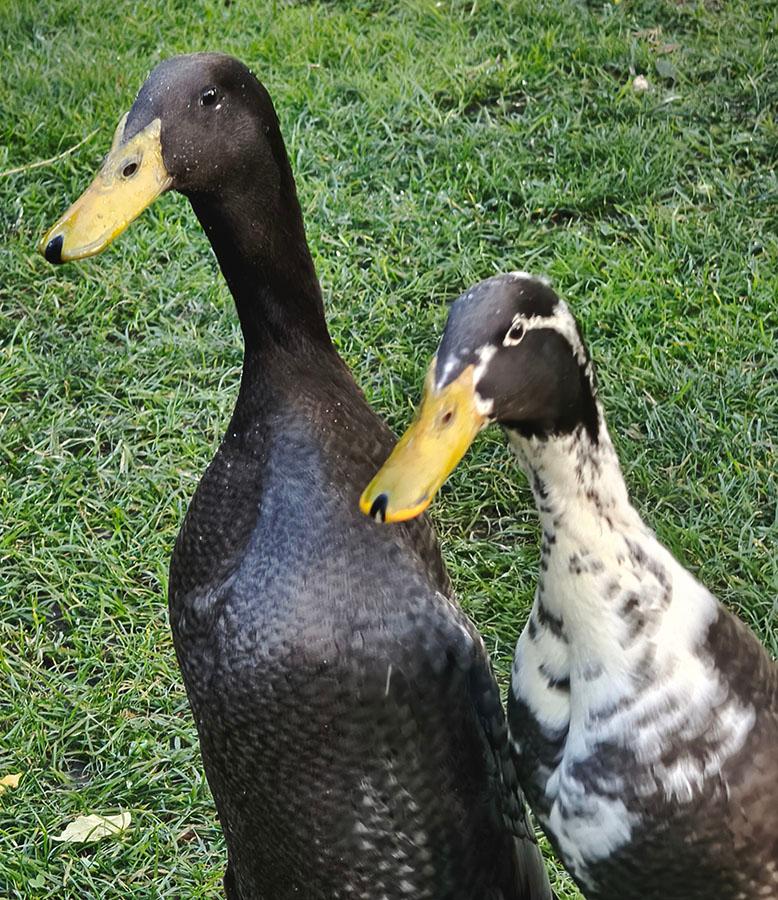
There are many colour varieties, although predominantly white plumage is among the most common. Brown, beige, grey, black with greenish tones and even blue-grey varieties can also be found. Some varieties combine several colours, with the well-known Fawn and White pattern being particularly recognisable (Ashton, 20–22).
This wide range of colours also makes Indian Runner ducks highly valued as ornamental birds. Despite their impressive height – reaching up to approximately 75 cm when standing upright – they are relatively light, usually weighing up to around 2 kg. Drakes are generally slightly larger, while females tend to be louder. Their typical lifespan is around 8–10 years, although some individuals may live up to 12 years.

What Conditions Do Indian Runner Ducks Need?
Experienced poultry keepers will usually know how to prepare for a new breed, but for beginners it is worth explaining a few basic requirements – what to feed Indian Runner ducks, how to prepare their outdoor run and what equipment should be provided in the duck house.
A Large Outdoor Run or Aviary Is Essential
Indian Runner ducks are generally very active birds, so they should be given plenty of opportunities to move outdoors. Whenever possible, it is advisable to provide them with more space than the standard 3 m² per duck or chicken and to protect the area from predators, for example by creating a secure aviary or fenced run.
There is usually little reason to worry about them escaping while foraging freely in the garden, as they are generally unable to cross a barrier around 1 metre high. Providing sufficient space is also important because Indian Runner ducks are social birds and feel best in groups. Keeping only one or two birds, even for ornamental purposes, is therefore not recommended.
What Should Indian Runner Ducks Be Fed?
 The diet of Indian Runner ducks can be based on good-quality complete feed for ducks or waterfowl. Periodic supplementation may also be useful, for example with calcium to support strong eggshells.
If they are given a sufficiently large run, the ducks will naturally supplement their diet with fresh greens and slugs. They can also be offered chopped carrots, cucumbers, beetroot or lettuce leaves. Because Indian Runner ducks actively forage in the garden, it is advisable to avoid the use of strong chemical sprays and plant fertilisers in areas accessible to the birds.
Proper Duck House Design and Equipment
The duck house should take the anatomy of Indian Runner ducks into account. Because they cannot fly properly, perches are unnecessary, but the entrance should be sufficiently high to accommodate their upright body shape.
The floor should be covered with hay or wood shavings, which need to be replaced regularly because dirt and moisture can accumulate relatively quickly. The structure itself should be weatherproof, protected against moisture and draughts, but still provide adequate ventilation. Nest boxes, feeders and drinkers can be similar to those used for other poultry species.
Breeding and Natural Incubation Can Be Challenging
Indian Runner ducks generally do not have a particularly strong brooding instinct, so natural incubation is often less reliable than with some other poultry species. For this reason, artificial incubation in an incubator is usually the better solution (Cooper, 248).
For hobby use, one of the simpler and more affordable incubator models is usually sufficient. To successfully incubate Indian Runner duck eggs, a temperature of approximately 37.5°C is generally recommended. Until around day 25, humidity should typically remain at approximately 55–60%, and daily misting with lukewarm water may also be recommended. During the final three days, humidity should be increased to approximately 65–80%. During the first stage of incubation, eggs should also be turned around 2–4 times per day.
Do Indian Runner Ducks Need a Pond?
 It is worth drawing the attention of potential keepers to one important issue that was already noted more than 100 years ago. Although Indian Runner ducks can technically be kept as land-based birds, provided that they have constant access to fresh drinking water, if bird welfare is a priority, even a small pond or bathing area is a major advantage. Like other ducks, Indian Runners simply enjoy being in the water (Valentine, 52–53).
This does not mean that you need to build an artificial lake. A dog paddling pool or any large, durable plastic container filled with water can work well as a small duck pool. If such a bathing area is provided, the water should be cleaned and replaced regularly. The used water can later be reused, for example, for watering plants.
Keeping Indian Runner Ducks for Eggs and Meat – Is It Worth It?
People who enjoy fresh eggs will appreciate the relatively good egg production of Indian Runner ducks. Under very favourable conditions, some lines may produce up to 300 eggs per year, although actual performance depends on housing, diet, age and genetics.
In realistic backyard and organic keeping conditions, around 150–200 eggs per year is a reasonable expectation, with individual eggs typically weighing around 70–75 g (Nervo et al., 549; Custură, 323).
Why does egg production vary so much in this Asian breed? There are probably several reasons. One explanation is provided by J. Metzer, who notes that Indian Runner ducks still have a reputation for high egg production in Asia, but after being introduced to North America, breeding increasingly focused on body shape and colour variety rather than laying performance. As a result, selection for egg production became more limited and annual laying performance declined. A similar situation can also be observed in Europe.
Keeping Indian Runner ducks for meat is much less profitable, especially when compared with meat breeds such as Pekin ducks, which can reach around 3.2–4.1 kg in 7–8 weeks (Biesiada-Drzazga et al., 21).
Indian Runners are extremely active birds, which makes fattening them difficult because a large proportion of consumed calories is simply burned through movement. Their body type and long-term breeding selection also mean that commercial meat production from Indian Runner ducks is generally inefficient.
Indian Runner Ducks as Natural Slug Control
There is, however, another role in which these ducks perform exceptionally well. The growing popularity of organic farming and agritourism has encouraged many farmers and growers to look for natural alternatives to chemical pest control.
Indian Runner ducks fit perfectly into this approach because they have a strong foraging and hunting instinct. While many other duck breeds tend to focus more on vegetation, Indian Runners are particularly efficient at searching for slugs, snails, earthworms and insects.
However, once slugs and insects become scarce, the ducks may also become interested in vegetables or fruit, especially strawberries or young cabbage within reach of their bills.
Depending on the severity of the slug problem, around 2–6 ducks, especially Indian Runners, may help control pests over an area of up to 1 acre, or approximately 0.4 ha (Holderread, 2–3).
It is important to remember that constant activity of ducks on a very small area can quickly damage grass or other plants (Nervo et al., 551). It is therefore advisable to monitor their movement or protect sensitive crops with suitable netting (Whitefie, 51–52).
Interestingly, using Indian Runner ducks to control agricultural pests is not a new practice. In Asia, they traditionally foraged in rice fields, and some businesses have used them for decades. One well-known example is the Vergenoegd Löw wine estate in South Africa, where ducks have been used for around 30 years and have even become a local tourist attraction.
How Much Does an Indian Runner Duck Cost?
 It is difficult to clearly define what should be considered a low or high price for an Indian Runner duck. This is mainly because the breed is often treated as ornamental poultry, meaning that some colour varieties can command significantly higher prices than others.
Based on average offers available in Poland in 2026, hatching eggs usually cost up to around PLN 5 each, young birds up to approximately 8 months of age may cost up to around PLN 50 each, while older birds can cost up to around PLN 100.
Rare varieties include crested Indian Runners as well as solid emerald, chocolate and silver colour forms. However, these lower prices generally refer to birds with mixed plumage and often without a pedigree.
Prices above PLN 100, and often around PLN 200 or more, are usually paid for particularly desirable birds or representatives of award-winning breeding lines. Such birds should have a pedigree leg ring with an individual identification number, confirming that the breeder is registered with the relevant poultry breeders’ association.
Sellers may also be able to provide show results for the bird itself or for its parents. On a 100-point judging scale, for example, birds scoring around 93 points may be considered very good, while 96 points may indicate an outstanding specimen. Birds scoring below 90 points may be considered not to meet exhibition standards.
Such birds can still be excellent garden ducks, provide eggs and help control slugs, but they are unlikely to win prizes at poultry shows.
Who Are Indian Runner Ducks Best Suited For?
To sum up, who should consider keeping Indian Runner ducks? Looking at their overall characteristics, it is clear that their ornamental value is one of their main advantages. They are therefore ideal as attractive garden birds, mascots or a feature of agritourism farms and backyard flocks.
Another major benefit is their strong hunting instinct and excellent ability to control slugs, while at the same time providing natural manure for plants. This makes them particularly appealing to people interested in organic gardening and environmentally friendly farming.
Keeping the Indian Runner lines commonly available in Europe as laying ducks can also be worthwhile, especially as a secondary function. However, anyone primarily interested in duck meat production should consider other breeds specifically selected for that purpose, because Indian Runner ducks are not particularly suitable for efficient meat production.
Bibliography:Ashton C. Indian Runner colours, „Fancy Fowl magazine” 2009, vol. 28, no. 11.
Biesiada-Drzazga B., Brodzik U., Wencek E., Użytkowanie kaczek rzeźnych w Polsce, cz. I. Cechy produkcyjne i czynniki je kształtujące, „Przegląd hodowlany” 2018, no. 2.
Cherry P., Morris T., Domestic Duck Production, Science and Practice, Wallingford 2008.
Cooper C., The Complete Beginner’s Guide to Raising Small Animals, Ocala 2012.
Custură I., Tudorache M., Gheorghe A., Van I., Marin M., Bahaciu G., Șuler A., Marmandiu A., Popescu-Micloșanu A., Șonea C., Breeding and production parameters obtained from the common duck, „Scientific Papers. Series D. Animal Science” 2021, vol. LXIV, no. 1.
Holderread D., Storey’s Guide to Raising Ducks, Pownal 2001.
Malik V., Atlas ras drobiu, Warszawa 1968.
Metzer J., The Advantages of Ducks and Their Eggs, „American Livestock Breeds Conservancy Newsletter” 2012, vol. 29, no. 3.
Nervo V., Vrbančić M., Tušek T., Mogućnost korištenja pataka indijskih trkačica u ekološkoj poljoprivredi, [in:] Conference paper: 52. hrvatski i 12. međunarodni simpozij agronoma, 12–17 February 2017, ed. S. Vila, Z. Antunović, Dubrovnik 2017.
Ta winnica „zatrudniła" stado 800 kaczek. Ptaki pilnują, by szkodniki trzymały się z dala od winorośli, source: National Geographic.
Whitefie P., How to Make a Forest Garden, Wiltshire 2002.
Valentine C., The Indian Runner Duck Book, Ridgewood 1911.