Many people ask how to build a backyard aviary in the easiest, cheapest and most practical way. The aviary will mainly house ornamental birds such as chickens, pheasants and ducks, or possibly more unusual exotic bird species. In this short article, we present a ready-made solution. There are, of course, many possible construction methods, but we will focus on the most popular, relatively inexpensive and most frequently chosen option among poultry and bird keepers in Poland. For ground-dwelling birds such as chickens and pheasants, as well as waterfowl, there is no need to use highly specialised components. However, it is important that all materials are durable and corrosion-resistant. Modern technology makes it possible to manufacture aviary netting and structural elements with an outdoor lifespan of around 15 years – this applies both to plastic netting and welded metal mesh.
Post Contents [hide]

What Size Should a Backyard Aviary Be?
A recommended size for a small backyard aviary is a rectangle measuring 4 x 6 metres, providing a total area of 24 m². This amount of space can comfortably accommodate around 10–15 chickens, 5–10 pheasants or a mixed group of birds in different combinations. The wall height should ideally be around 2 metres, excluding the concrete base. This is a standard height that can easily be covered with most types of aviary netting without generating unnecessary waste. Pheasants kept in aviaries can also be marked using , making individual birds easier to identify later.
Aviary Frame Construction
The aviary frame is best made from steel profiles, preferably galvanised ones. Closed steel profiles measuring 40 x 30 mm work particularly well. For people who are not comfortable with welding or metalwork, the structure can also be made from .
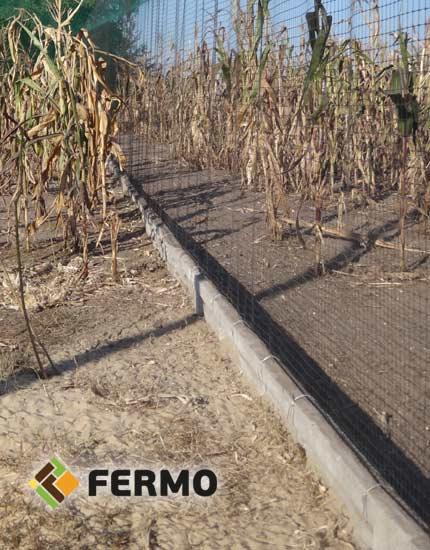
Vertical posts should be spaced no more than 2 metres apart. At ground level, it is a good idea to install concrete slabs or ready-made concrete edging. These should be buried so that at least half of their height remains below ground level. Common prefabricated element heights are 20, 25 and 30 cm.
Concrete elements are completely resistant to corrosion, help stabilise the aviary mesh and also raise the structure by approximately 10–15 cm above ground level.
Best Mesh for Aviary Walls
The most commonly purchased are coated with PVC.
The most popular option is hexagonal mesh with a 20 mm opening, mainly because sparrows cannot easily pass through a .
If you want the aviary to be as fully enclosed as possible, preventing even young sparrows, tree sparrows, tits and other very small wild birds from entering, it is better to use or .
If wild birds are not a concern and you do not plan to keep very young chicks inside the aviary, you can use .
If you are certain that the aviary is not exposed to predators such as feral cats, martens or dogs, you can also use a special polyethylene plastic net. This type of aviary netting is supplied in large rolls, for example 200 metres long, and is available at a very competitive price.

Best Netting for the Roof of an Aviary
For the top of the aviary, is one of the best solutions.
Our netting is manufactured from specially reinforced polyethylene fibres that are resistant to weather conditions and, very importantly, 100% resistant to UV radiation. We strongly advise against using netting of unknown origin made from materials such as polyamide or similar fibres.
Only high-quality polyethylene netting provides long-term outdoor durability, with an expected service life of up to around 15 years under suitable conditions. Polyethylene aviary netting can be used even for very large aviaries covering several hectares.
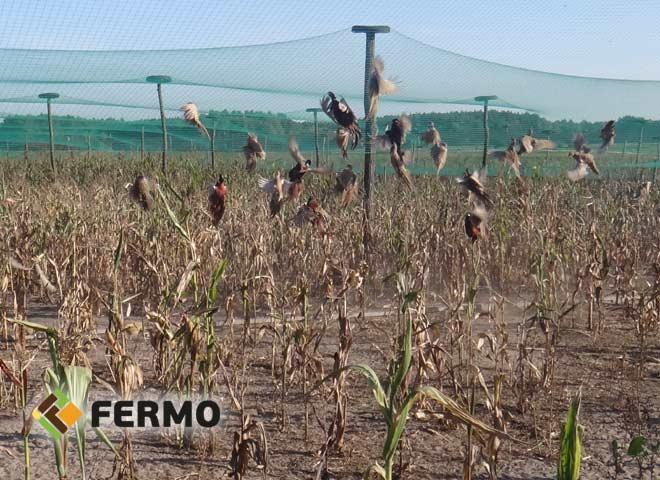
For pheasant safety, roof netting should have suitable elasticity. Polyethylene netting is flexible, strong and resistant to tearing. If damaged, it does not unravel easily. This provides greater safety for pheasants and other nervous birds that may suddenly fly upwards and collide with the aviary roof when startled.