
Poultry red mite (Dermanyssus gallinae) is a well-known problem found on poultry farms and in backyard chicken coops. is not easy to eradicate. It can remain dormant for several months without feeding on birds' blood, waiting for favourable conditions to begin reproducing and subsequently infest the flock. Poultry red mites feed mainly at night, when chickens are resting. During the day, the mites hide in hard-to-reach cracks and crevices in nests and poultry buildings, where female poultry red mites also lay their eggs. In chicken coops with a severe infestation, specialised products designed to support poultry red mite control should be used. One of the best solutions for getting rid of poultry red mites is to apply a .
Post Contents [hide]
Poultry Red Mite – Effective Red Mite Control in Chickens

The first step is to thoroughly clean the entire chicken coop, removing litter, dust and other debris, as these conditions provide ideal hiding places for poultry red mites during the day. A vacuum cleaner or compressed air can be used for this purpose. It is worth preparing your poultry farm for a possible red mite infestation by keeping on hand, while choosing solutions that are safe for animals. To effectively get rid of poultry red mites, thoroughly spray all parts of the chicken coop – walls, floors, roofs and, most importantly, all cracks and crevices where the mites tend to hide. For long-lasting results, the poultry red mite treatment should be repeated two or three times at intervals of 7 to 10 days. This helps eliminate subsequent generations of mites and keeps the chickens protected. Veterinary consultation and appropriate are also recommended to support the immunity of weakened poultry.
Poultry red mites are considered one of the most dangerous parasites affecting poultry in Europe, as severe infestations can contribute to poultry mortality. Effective poultry red mite control is therefore essential for maintaining good production results.
Poultry Red Mite Life Cycle

- A single chicken can host as many as 500,000 poultry red mites and may lose up to 5% of its blood in a single night.
- As few as 5,000 poultry red mites feeding on one chick may reduce its weight by up to 1 g per day.
- The poultry red mite life cycle lasts approximately 7–17 days, depending on temperature and humidity.
The high reproductive rate, rapid development cycle and harmful effects of poultry red mites on poultry, young birds, animals and even humans make effective control extremely important.
Effective Poultry Red Mite Control Products
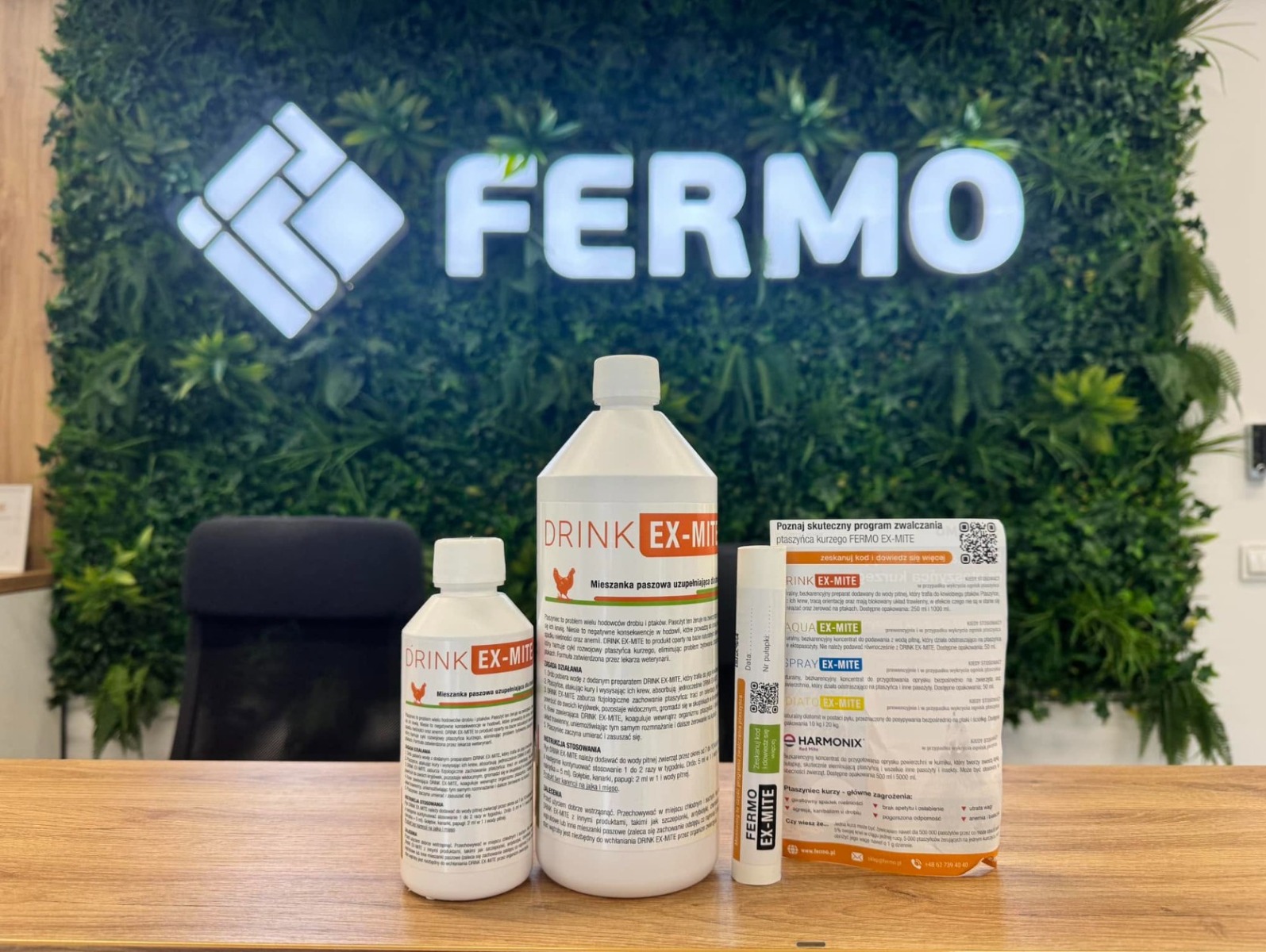
is a water-soluble product with a physical and mechanical mode of action. It is particularly recommended for controlling poultry red mite infestations and can also immobilise other crawling insects. The product is designed for use in poultry housing and farming facilities. Importantly, it can be used in the presence of poultry.
Harmonix® Red Mite is an insecticide without a conventional active substance, containing a cellulose polymer in a high-quality solvent (isopropanol), which is widely used in the food industry. The poultry red mite treatment acts like a sticky trap. Upon contact with mites, it forms a concentrated layer that irreversibly immobilises the parasites, causing them to die.
The ingredients contained in the product penetrate layers of dust and dirt. Harmonix® Red Mite is a versatile product that can be used as a standalone poultry red mite treatment or alternated with conventional insecticides.
It can be used at every stage of poultry production:
- Before introducing a new flock of poultry,
- When the first signs of a parasite infestation are observed in growing birds – the product can be used in the presence of chickens, turkeys and other poultry,
- After emptying cages or chicken coops during cleaning.
The poultry red mite treatment does not promote chemical resistance to active substances and can therefore be used repeatedly as part of a red mite control programme. Harmonix® Red Mite is an ideal solution for egg and poultry meat producers, including organic farms. Due to the limited chemical residues, farmers do not have to worry about pesticide contamination.
Benefits of using for poultry red mite control:
- Helps reduce stress and aggression among poultry,
- Helps reduce the transmission of pathogens and diseases,
- Supports egg and meat quality,
- Improves poultry farm productivity,
- Supports better growth conditions,
- Improves poultry hygiene and safety.

Contains: Methylcellulose 35.57 g/L – Soluble Concentrate (SL)
Dosage
- Apply the poultry red mite treatment as a surface spray using a suitable mechanical, electric or motorised sprayer that produces coarse droplets. Direct the spray at red mite clusters and at cracks and crevices where the pests hide.
- 1 L of Harmonix® Red Mite + 7.5 L of water per 200 m².
- Absorbent surfaces may require a higher application rate.
- Reapplication of Harmonix® Red Mite is recommended 7–10 days after the first treatment or whenever poultry red mites reappear.
Mechanical Methods of Poultry Red Mite Control
A popular natural method for controlling poultry red mites is the use of diatomaceous earth (amorphous diatomite). Diatomaceous earth works through a purely mechanical process. It is a natural powder used against fleas, mites, lice, bed bugs and other external parasites affecting poultry. However, when controlling poultry red mites, prevention and regular treatment are extremely important. All measures should be carried out at appropriate intervals, which is why understanding the poultry red mite life cycle is essential.
Diatomaceous Earth for Poultry Red Mites

The natural structure of and its microscopic sharp edges damage the protective outer layer of poultry red mites, eventually causing them to die. Diatomaceous earth creates unfavourable conditions for poultry red mites and can therefore be used as part of parasite control in both large poultry houses and small wooden chicken coops. Its high absorbency also helps dry out red mite eggs and larvae by reducing moisture and limiting conditions favourable for parasite reproduction. Due to the fine structure of diatomaceous earth, appropriate precautions should be taken to avoid prolonged inhalation by humans.
There are several ways to use diatomaceous earth:
- Spreading it directly onto the litter and in areas used by poultry. It can also be used to provide chickens with a dust bath . For the product to work mechanically, poultry red mites need to come into direct contact with the diatomaceous earth. Birds can dust-bathe in containers filled with dry diatomaceous earth, helping expose parasites to the powder.
- Diatomite can also be mixed with water and sprayed inside the chicken coop. The treatment can be repeated 1–3 times at intervals of several days.
- Poultry keepers may also coat walls with a suspension of diatomaceous earth and water. After the water evaporates, a layer of diatomaceous earth remains on the walls, helping create unfavourable conditions for poultry red mites.
- Diatomaceous earth is also sometimes added to poultry feed.
Diatomaceous earth used as part of poultry red mite control is a natural mineral product. Many poultry keepers who discover a red mite infestation in their chicken coop initially turn to natural and home remedies. One of these is vinegar, which may affect mite activity but does not provide reliable insecticidal control. Therefore, vinegar alone should not be expected to completely eliminate a poultry red mite infestation. Another traditional method is the use of lime. It can be spread under the litter, but it is particularly useful for whitewashing walls, as it helps seal small cracks and crevices where parasites may hide. However, lime for poultry red mites, like vinegar, should not be considered a fully effective standalone treatment.
Not sure whether you have poultry red mites? Read our article: How to Detect Poultry Red Mites and Get Rid of Them!