
Keeping guinea fowl is an excellent alternative to chemical plant protection products, helping improve crop quality and the overall condition of the soil. Guinea fowl are a natural and highly effective way to control pests such as ticks, slugs, Colorado potato beetles, caterpillars and other beetles, while causing much less damage to vegetation than other types of poultry, such as chickens or ducks.
In addition, the characteristic sounds made by guinea fowl can help deter other unwanted visitors, including rodents such as mice and rats, while also alerting the household to unusual activity. Guinea fowl naturally supplement their diet with insects and molluscs, which can reduce feeding costs for the keeper. It is also worth noting that guinea fowl are highly resistant to changing weather conditions and many common poultry diseases, making them relatively easy to keep. Discover how to reduce garden pests naturally while also obtaining nutritious eggs and valuable meat.
Post Contents [hide]
Guinea Fowl – What Kind of Bird Is It?
People who see a guinea fowl for the first time often ask: what kind of bird is a guinea fowl? It is a medium-sized bird belonging to the guinea fowl family and descended from African ancestors. It is still a relatively niche poultry species, particularly popular in France and Belgium. Guinea fowl meat is considered a valuable product and is sometimes regarded as a luxury food.
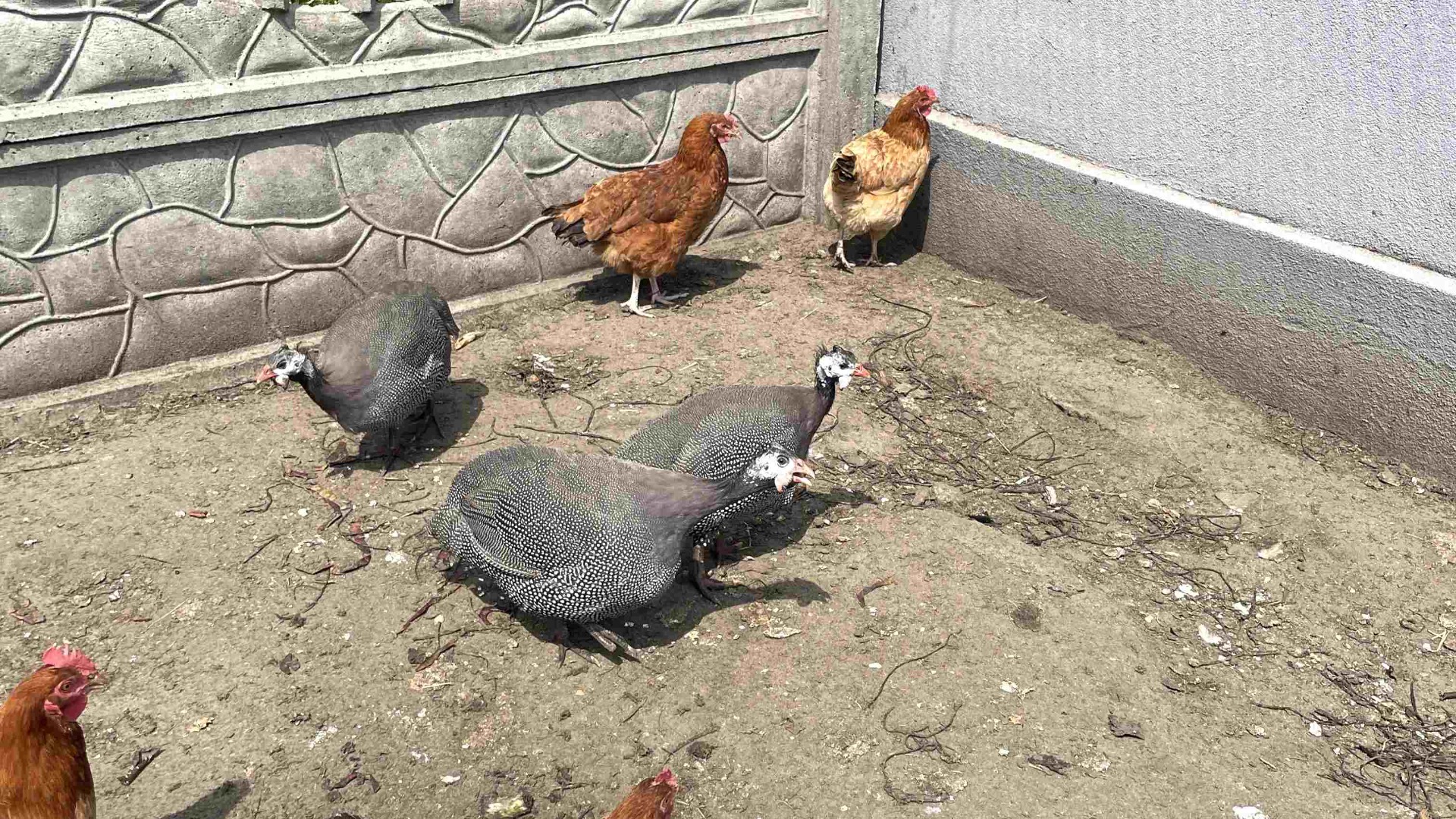
In Poland, guinea fowl are kept as ornamental birds as well as for meat and eggs. They can often be seen in zoos and agritourism farms because of their unusual appearance. What does a guinea fowl look like? Its body is covered with dark grey or blue-grey feathers decorated with small white spots resembling pearls. The head is bare and bluish, with a characteristic helmet and red wattles near the beak, while the legs are brownish-blue.
What does a male guinea fowl look like? The male is very similar to the female, but usually has a larger helmet and more prominent wattles. Males are also generally heavier than females.
How to Keep Guinea Fowl? Housing, Feeding and Egg Production
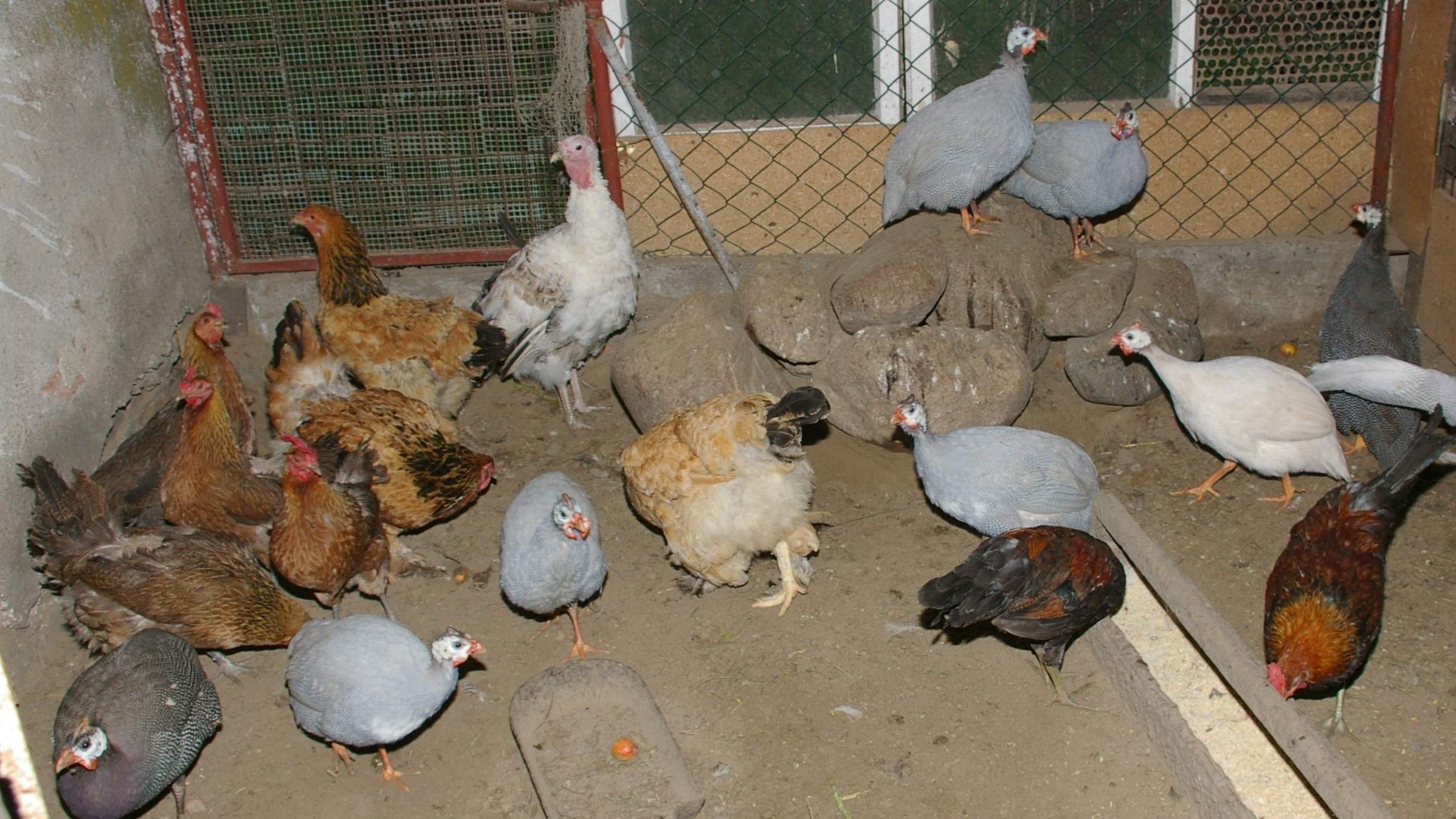
Keeping guinea fowl usually does not require major additional investment because their housing requirements are similar to those of laying hens. They can use the same perches in the poultry house, nesting boxes, drinkers and feeders.
Can guinea fowl live with chickens? Yes. They can usually be kept together because their basic housing needs are very similar and they can share the same poultry house.
What do guinea fowl eat? Their basic diet can include complete laying-hen feed mixed with wheat or wheat meal, for example at around 20%, depending on the feeding programme, in order to avoid excessive fattening. Guinea fowl with access to free range and a garden may obtain a significant part of their daily food intake by foraging.
Guinea fowl are hardy and adapt well to changing temperatures. Birds kept on free range can also provide valuable meat with a flavour often compared to game.
As for egg production, guinea fowl usually begin laying between 22 and 26 weeks of age. Their main laying season runs from April to September, with the highest intensity usually occurring before June.
What does a guinea fowl egg look like? It is smaller than a chicken egg, more rounded and often regarded as a delicacy. Are guinea fowl eggs healthy? They are a rich source of nutrients and have a thick shell, which helps them retain freshness for a relatively long time.
Guinea fowl meat is considered a premium product and is often compared with pheasant or partridge meat because of its game-like character. Guinea fowl meat contains valuable micronutrients and is noted for its high protein content and relatively low fat content compared with many traditional poultry meats.
Benefits of Keeping Guinea Fowl – Why Are They Useful in the Garden?
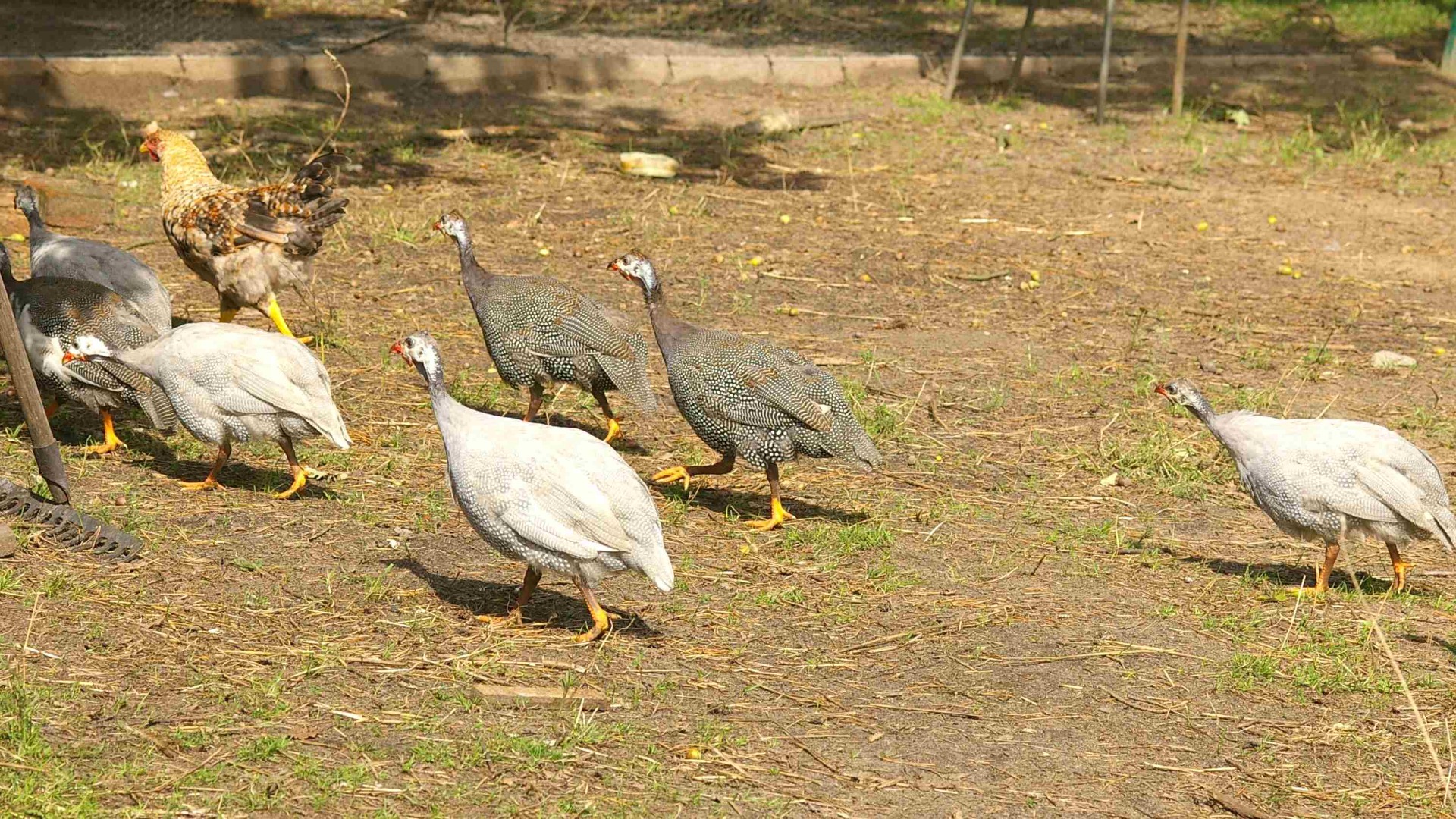
Guinea fowl have excellent eyesight and a natural instinct to forage across an area as a flock. Unlike chickens, guinea fowl tend to scratch flower beds and lawns less intensively and usually cause less damage to plant roots. They actively search the ground and leaves for insects, which makes them useful in gardens and crop areas.
Do guinea fowl eat ticks? Yes, ticks are one of the pests they may consume, but guinea fowl also feed on many other unwanted organisms:
- Ticks – guinea fowl actively forage for ticks in grass and vegetation, helping reduce their numbers in areas where the birds roam,
- Crop pests – they readily eat Colorado potato beetles and their larvae, aphids, grubs, caterpillars and beetles, which may help reduce the need for chemical plant protection products,
- Slugs and snails – guinea fowl also eat slugs and snails, helping reduce their populations in the garden,
- Rodent deterrence – their loud alarm calls and flock behaviour can discourage some unwanted visitors and alert the keeper to activity nearby,
- Lower feed consumption – through natural foraging, guinea fowl can obtain part of their daily food requirement outdoors, helping reduce feed costs,
- Natural fertiliser – poultry manure left by the birds is rich in nitrogen and can naturally improve soil fertility.
Why Do Guinea Fowl Scream and What Sound Do They Make?
Guinea fowl make loud, rhythmic and distinctive calls. Their characteristic guinea fowl sound is one of the most recognisable features of the species.
Why do guinea fowl scream? They are extremely alert birds, and their loud calls act as a natural alarm system. Guinea fowl calls are a natural warning response to potential danger. They may become noisy when they see a hawk in the sky, a fox near the fence, a dog, a cat or even an unfamiliar person entering their territory.
For this reason, many keepers value them as natural “watch birds”, because they can alert the rest of the farm to predators or strangers. However, it is important to remember that guinea fowl can be very noisy, especially when kept in larger groups. When planning to keep guinea fowl, it is a good idea to provide them with a spacious run located away from neighbouring properties or to inform neighbours about the birds’ characteristic behaviour.
Summary
To sum up, keeping guinea fowl can be an economical and environmentally friendly addition to a farm or garden. Guinea fowl can help reduce populations of ticks, slugs and crop pests while causing less damage to vegetation than some other poultry species. They also act as a natural alarm system, warning about predators and unusual activity.
Because their housing requirements are similar to those of chickens and they are efficient foragers, guinea fowl can be relatively simple and inexpensive to maintain. Their hardiness, nutritious eggs and lean, flavourful meat make them versatile and useful birds for both hobby keepers and small farms.
Bibliography:Jan Jankowski, Powszechne Wydawnictwo Rolnicze i Leśne Sp. z o.o., "Hodowla i użytkowanie drobiu" 2012
Frequently Asked Questions About Guinea Fowl:
What Do Guinea Fowl Eat?
Guinea fowl with unrestricted free-range access can obtain a significant proportion of their daily food from insects, ticks, slugs, greens and seeds. Their basic diet should consist of complete poultry feed or suitable grain mixtures such as wheat, maize and barley.
How Long Do Guinea Fowl Live?
Guinea fowl can live for more than 7 years and may reach around 8 years of age.
How Long Do Guinea Fowl Incubate Their Eggs?
The incubation period for guinea fowl eggs is approximately 22–28 days.
How Much Does a Guinea Fowl Cost?
In Poland in 2026, guinea fowl chicks typically cost around PLN 10–15, while adult birds may cost approximately PLN 60 each.
How Much Do Guinea Fowl Eggs Cost?
In Poland in 2026, a pack of 20 guinea fowl eggs typically costs around PLN 30–40.
Can Guinea Fowl Live With Chickens?
Yes, guinea fowl can usually share the same poultry house and outdoor run with chickens. Their basic housing requirements are very similar, and they can use the same perches, nest boxes, drinkers and feeders.
Where Should Guinea Fowl Be Kept?
During the day, guinea fowl should have access to an outdoor run and can also roam freely in a secure garden. At night, it is best to close them inside a poultry house to protect them from predators.
What Garden Pests Do Guinea Fowl Eat?
Guinea fowl forage for ticks, slugs and snails, Colorado potato beetles and their larvae, aphids, caterpillars, grubs and other beetles. Their loud alarm calls and active presence may also discourage some rodents and alert the keeper to unusual activity.