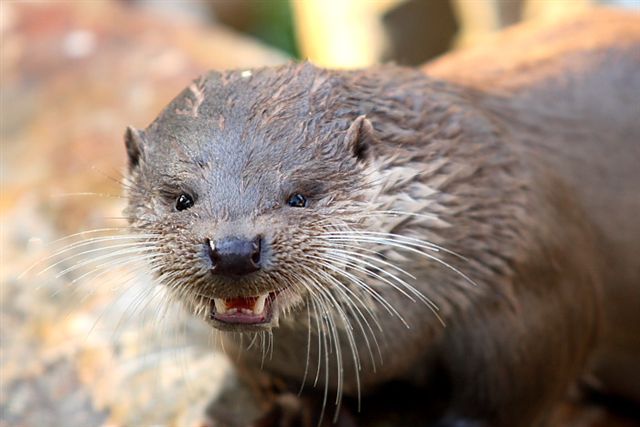
A significant problem faced by many pond owners, fish farmers and anglers is the issue of otter activity. The otter population in Poland has increased significantly in recent years. An additional challenge is that this close relative of the weasel is subject to partial legal protection. For this reason, fish farmers and pond owners need to use appropriate protective measures to prevent damage caused by these small predators. One of the most effective solutions for protecting ponds against otters is an , which, unlike traditional traps or poisons, is a considerably less expensive and less labour-intensive method.
A correctly constructed electric fence for protecting ponds should also form an effective physical barrier that is difficult for an otter to cross. When constructing the fence, it is important to remember that otters are extremely fast and agile mammals. For this reason, the fence should be sufficiently high and its conductors should be positioned close enough together to prevent the predator from passing between them. It is also important that no component of the electric fence comes into direct contact with the water.
Wooden fence posts are one of the most suitable and stable solutions when constructing an electric fence against otters. Suitable insulators for wooden posts, such as ring insulators, can be fitted to the posts to help prevent unwanted electrical leakage and faults.
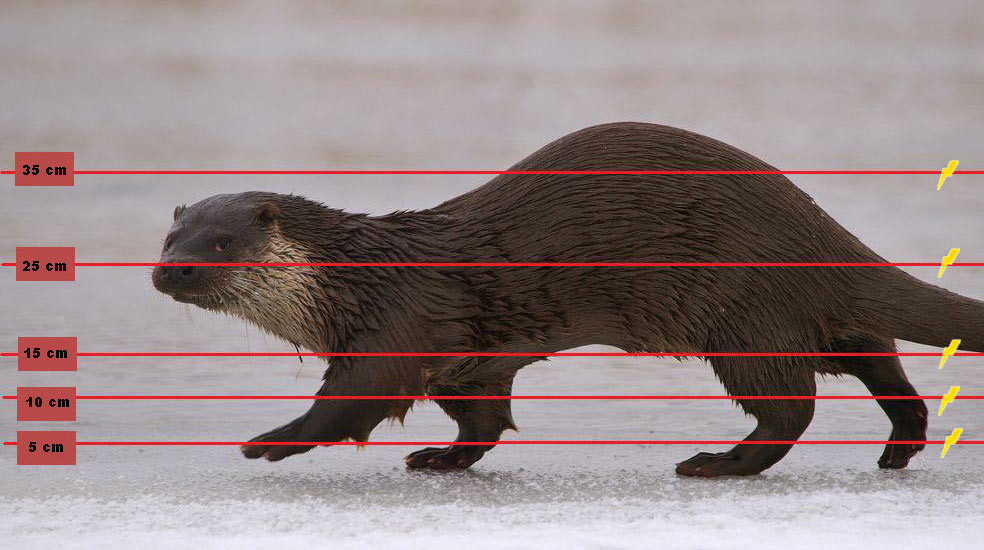
When constructing an electric fence line against otters, it is best to use durable , including or electric fence polywire, which are strong and resistant to stretching. The conductors should be properly tensioned using a dedicated fence tensioner and tensioner handle. It is recommended to use 5 conductor lines, with the first positioned approximately 5 cm above the ground, followed by lines at 10 and 15 cm, and the final two at 25 and 35 cm. Two additional conductors can also be installed at heights of approximately 50 and 75 cm above the ground. It is recommended that one of the fence conductors is positioned approximately at the height of an otter's nose.
The selected should provide sufficient output energy to effectively deter unwanted animals from fish ponds and breeding areas – a minimum of approximately 3 J is recommended. The effectiveness of the energizer is also affected by vegetation along the fence. The conductors should not come into direct contact with grass, weeds or other vegetation, as this can reduce fence performance. To further protect ponds and other bodies of water, a protective net or fine-mesh electric fence netting can also be used as an additional barrier against otters.