

18 L Bee Waterer with Expanded Clay Pebbles | Automatic Apiary Watering Station
Description
18 L Automatic Bee Waterer with Expanded Clay Pebbles is a professional apiary watering station designed to provide honey bees with a continuous, safe and abundant supply of clean drinking water. Its large 18-litre capacity ensures reliable hydration even in larger apiaries, helping prevent dehydration, colony stress and interruptions in brood development. The set includes a durable bucket-style bee waterer with a lid and carrying handle, plus 5 litres of natural expanded floating LECA pebbles, which create a safe floating landing platform for bees.
Why Is Water Essential for Honey Bees?
Honey bees require access to fresh water throughout the year, with the greatest demand occurring during spring brood rearing and throughout periods of intense summer heat. Bees do not store drinking water inside the hive—they collect it daily to feed larvae, regulate humidity and cool the colony through evaporation.
Without sufficient water, colonies may experience:
- Reduced or interrupted brood feeding.
- Removal or abandonment of developing larvae.
- Weakening or even collapse of entire bee colonies.
During hot weather, forager bees transport water in their honey stomachs and deposit it inside empty comb cells, where evaporation naturally cools the hive and maintains optimal humidity. If no clean natural water sources are available nearby, bees often collect contaminated water from puddles, livestock areas or roadside ditches. The 18 L Bee Waterer with Expanded Clay Pebbles provides a safe, dedicated water source close to the apiary, reducing these risks.
How the 18 L Bee Waterer Works
This automatic bee watering station uses a gravity-fed siphon system. Water is automatically released from the sealed 18-litre reservoir into the circular drinking trough as bees consume it, maintaining a constant water level while protecting the remaining water from dirt, dust and contamination.
The supplied expanded clay pebbles (LECA) float on the water surface, creating a dense, stable floating platform. Their lightweight, porous texture provides bees with a secure landing area, allowing them to drink safely without the risk of drowning.
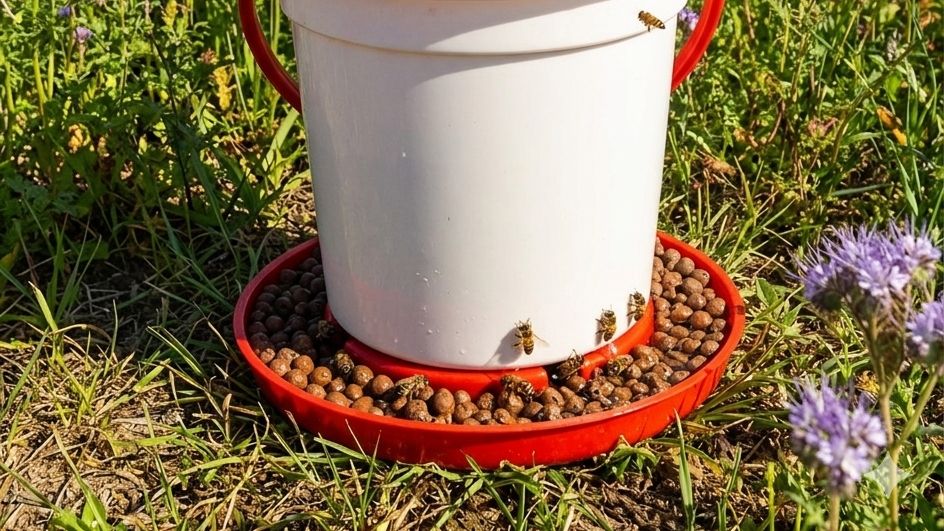
Benefits of the 18L Bee Waterer with Expanded Clay Pebbles
- Large 18-litre capacity – requires less frequent refilling, making it ideal for both stationary and migratory apiaries.
- Protects honey bees – floating LECA pebbles virtually eliminate the risk of drowning.
- Healthier bee colonies – provides constant access to clean water close to the hive, reducing long-distance foraging.
- Automatic water level control – the gravity-fed design continuously replenishes the drinking trough without manual intervention.
- Eco-friendly solution – natural expanded clay is durable, reusable and completely safe for bees and the environment.
- Convenient to use – equipped with a strong carrying handle for easy transport and optional hanging.
How to Prepare and Maintain the Expanded Clay Pebbles
- Rinse before first use: Expanded clay may contain natural mineral dust. Wash thoroughly before placing it in the waterer.
- Fill the drinking trough: Spread the rinsed LECA evenly around the circular trough. The floating clay pebbles immediately form a safe platform for bees.
- Maintain hygiene: Rinse the clay pebbles whenever the water is changed to prevent algae and bacterial growth.
- Regenerate when necessary: If the clay develops an odour or heavy deposits, wash thoroughly, pour boiling water over it (optionally with potassium soap), then dry completely in the sun before reuse.
FAQ – 18 L Bee Waterer
How long does an 18-litre bee waterer last?
The duration depends on colony strength, the number of hives and weather conditions. During moderate weather, an 18-litre reservoir may supply water for several days or even weeks. During spring brood rearing or extreme summer heat, consumption increases significantly, but the large capacity greatly reduces the need for frequent refilling.
Why are expanded clay pebbles better than moss, straw or stones?
Moss and straw quickly decompose in water, encouraging bacteria and fungal growth, while stones are heavy and do not retain moisture. Expanded clay pebbles float permanently, absorb water, provide excellent grip for bees and can be reused repeatedly after cleaning.
How often should the bee waterer be cleaned?
Inspect the water at least once a week, especially during warm weather. Whenever the water is replaced, rinse the expanded clay to remove algae and maintain optimal hygiene.
Where should the bee waterer be placed?
Place the waterer in a sunny, sheltered location several metres from the hive entrances, avoiding the main flight path. Bees naturally prefer slightly warmed water.
Can the waterer be used with vitamins or sugar syrup?
The waterer is designed primarily for clean drinking water or water-soluble vitamin supplements. Thick sugar syrups may affect the siphon system and require much more frequent cleaning to prevent fermentation.
Is the plastic safe for bees?
Yes. The waterer is manufactured from high-quality, BPA-free, food-grade plastic that is chemically inert, UV-resistant and suitable for long-term outdoor use.
Parameters
| EAN | 8718426001731 |
|---|---|
| Capacity | 18 l |
| Material | Plastic |
| Drinker type | Wiadrowe |
| Handle | No |
| Suspension handle | No |
Reviews
No reviews yet
Be the first to share your opinion and help others make a decision.
Write Your Own Review
Ask about the product
Ask about the product
Jot us a note and we'll get back to you as quickly as possible.
Jot us a note and we'll get back to you as quickly as possible.
